Introduction to Tarot: The Major Arcana and Your First Step Into the Cards
Tarot as a mirror, not a sentence
Some people come to tarot out of curiosity, others out of pain, and some simply because a card fell in front of them at a moment too perfectly timed to be coincidence. Whatever door you walked through, here's an invitation worth taking to heart: treat tarot as a symbolic mirror, not as an oracle that carves your fate in stone. The cards don't write your future in permanent ink — they illuminate possible paths, tendencies, and inner voices we often prefer not to listen to. That's the spirit in which we'll open this conversation about the Major Arcana, the symbolic heart of the deck.
78 cards, two different natures
A traditional tarot deck is made up of 78 cards, split into two large families that speak to each other but talk about different things. The Minor Arcana, made up of 56 cards organized into four suits, deal with everyday life: a falling-out with a friend, the nervousness before a job interview, the joy of a small but meaningful win. The Major Arcana, on the other hand, are the 22 cards that carry the big themes of human existence — transformation, purpose, love, loss, symbolic death, rebirth. When one of these cards shows up in a reading, it's usually said that the moment being lived carries archetypal weight, that it goes beyond the day-to-day and touches something larger in the querent's life path.
The word arcana itself comes from Latin and means 'secret' or 'mystery' — quite a name for cards that, over the centuries, have been read as fragments of a wisdom older than any of us.
The Fool's Journey: a story told in 22 scenes
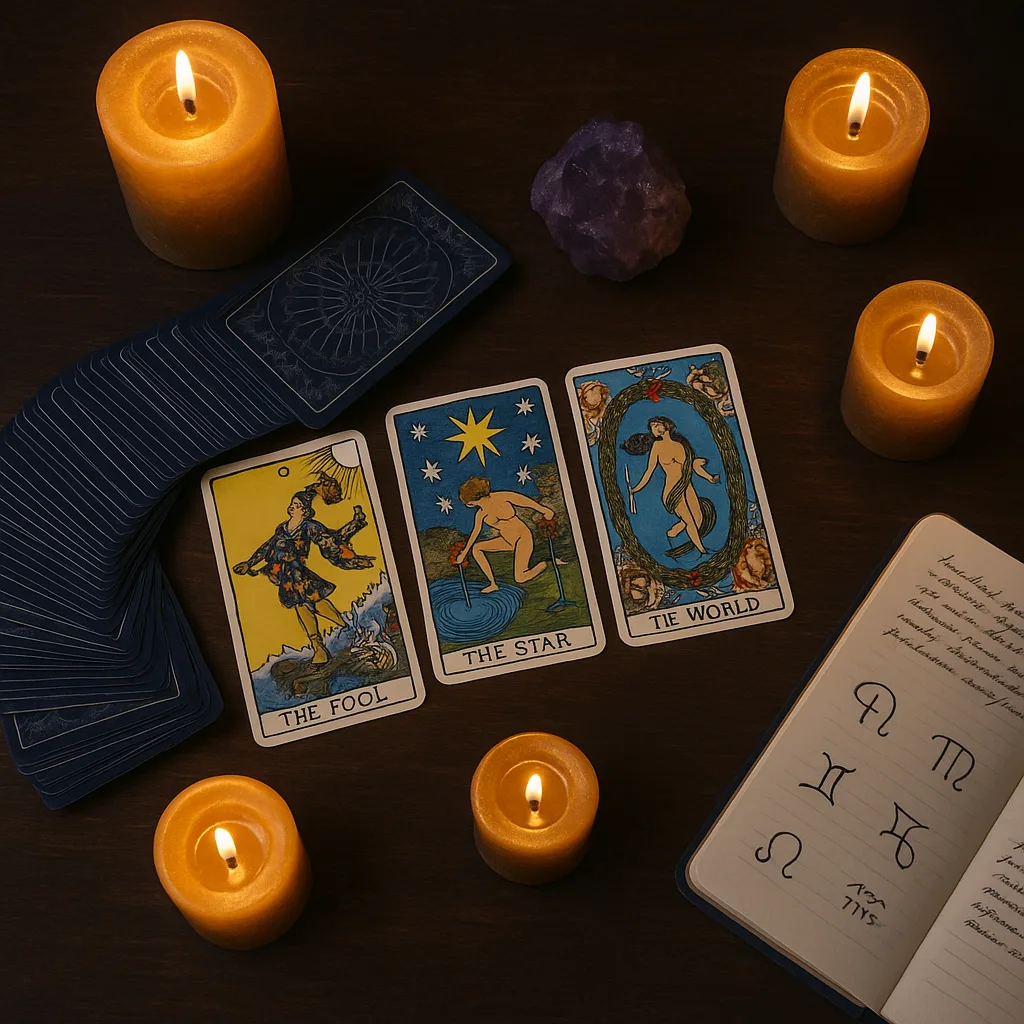
Of the 22 Major Arcana cards, 21 carry a number and only one has none at all: The Fool. This absence is no accident — The Fool represents the starting point, the moment before any label, when we still don't know who we're going to become. From there, the numbers run from I to XXI, and this progression is traditionally read as a continuous narrative that many scholars have named the Fool's Journey.
Think of it as a story told in chapters: The Fool sets out into the world with faith and spontaneity; The Magician awakens his talents and tools; The High Priestess reveals quiet intuition; The Empress and The Emperor teach about creation and structure; and so the story unfolds, moving through trials like Death (not literal, but symbolic — the necessary end of a cycle) and The Hanged Man (the pause that demands a new perspective), until it arrives at cards of rescue and light, like The Star, and finally reaches The World, arcanum number XXI, which closes the cycle with a sense of wholeness and integration.
Here's a curious detail that helps explain why tarot isn't a rigid system: the position of two cards, Strength and Justice, shifts depending on the deck's tradition. In the Tarot de Marseille, Strength holds number XI and Justice number VIII; in the famous Rider-Waite-Smith deck, this order was swapped to align with the astrological correspondences developed by occult scholars in the early 20th century, linking each arcanum to a zodiac sign. There's no 'wrong' version here — just different languages within the same tradition.
The journey isn't a straight line but a spiral: we revisit the same themes at different levels of awareness, understanding them a little more each time.
That idea of a spiral is, perhaps, the most generous lesson the Major Arcana offer: growth isn't about moving forward without looking back, but about returning to the same lessons with new eyes.
A brief — and refreshingly undogmatic — history of tarot
It's worth debunking a common myth: tarot wasn't born as a mystical tool. Before the 17th century, these cards circulated in 15th-century Italian courts as an entertainment game among the nobility, and their allegorical figures carried simpler meanings tied to virtues and courtly life.
The esoteric turn only came in the 18th century, when Swiss clergyman and freemason Antoine Court de Gébelin argued — without solid historical evidence — that tarot had Egyptian origins and hidden Kabbalistic meanings. From there, other figures added new layers to the system: Etteilla developed divination methods, Éliphas Lévi deepened the symbolic correspondences, and in the 20th century the Hermetic Order of the Golden Dawn wove tarot together with astrology, giving rise to the popular Rider-Waite-Smith deck. Later, in the 20th century, Jungian psychologist Sallie Nichols read the Major Arcana as a map of the individuation process, bringing tarot closer to depth psychology.
In other words: the tarot we know today is a mosaic built from different historical layers — a card game, French occultism, astrological symbolism, Jungian psychology, and, more recently, a pop language reinvented through apps and social media. There's no single 'original truth' here — there's a living tradition that keeps being reinterpreted.
Recomendado
Astro Reflexo
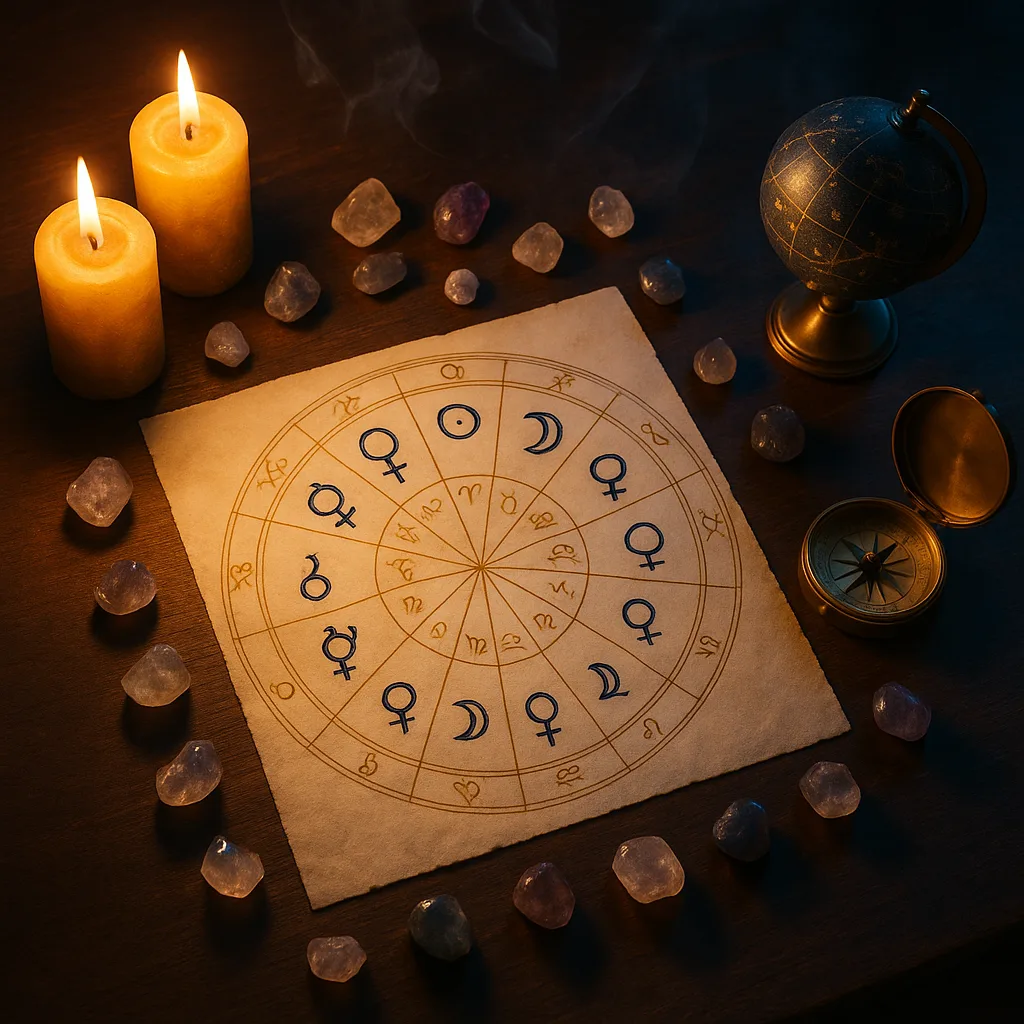
Descubra o que os astros revelam sobre quem você é. Em menos de um minuto, calculamos seu Sol, Lua e Ascendente com precisão astronômica e uma inteligência artificial escreve um resumo personalizado só para você.