Your First Tarot Deck: A Practical Guide to Choosing One and Studying the Major Arcana
Tarot as a Mirror, Not a Crystal Ball
Before we get into cards, decks, and meanings, it's worth resetting an idea that tends to keep a lot of people away from tarot: this practice wasn't born as — and doesn't work best as — a tool for literally predicting the future. Tarot is, above all, a symbolic language. A system of images that helps organize scattered thoughts, name hard-to-pin-down feelings, and see more clearly what's already shifting inside you. When someone pulls a card, the point isn't to forecast an event, but to shine a different light on the present moment.
Interestingly, this reflective role isn't how tarot began. The cards emerged in the mid-15th century, in Italian courts, as a sophisticated parlor game, with no mystical intent whatsoever. It wasn't until the 18th century that the deck was reimagined for the divinatory and introspective purpose we know today. Knowing this helps you approach tarot with a lighter touch: it's a living tradition that has already changed purpose once, and it keeps being reinvented by every person who sits down with the cards.
The Basic Structure: 78 Cards, Two Groups
A complete tarot deck has 78 cards, split into 22 major arcana and 56 minor arcana. The minor arcana are organized into four suits — typically cups, swords, pentacles, and wands — and deal with more everyday matters: work, relationships, day-to-day emotions. The major arcana, on the other hand, carry the big existential themes: beginnings, breakups, growth, transformation, facing your own shadow. They're numbered from 0, The Fool, to 21, The World, forming a sequence that many scholars read as a journey of inner development — from the initial impulse to leap into the unknown to a final sense of integration and wholeness.
Beginners often come across scaled-down decks for sale, with just the 22 major arcana, marketed as ideal starter sets. However, the advice from people who've studied tarot for a long time usually points the other way: even with zero experience, it's worth starting with a full deck right away. That way, you avoid having to buy a second deck down the road, and you get to grow familiar with the minor arcana gradually, at your own pace, with no rush.
Rider-Waite or Marseille: Two Different Entry Points
As you research which deck to buy, you'll run into two major visual traditions within classic tarot.
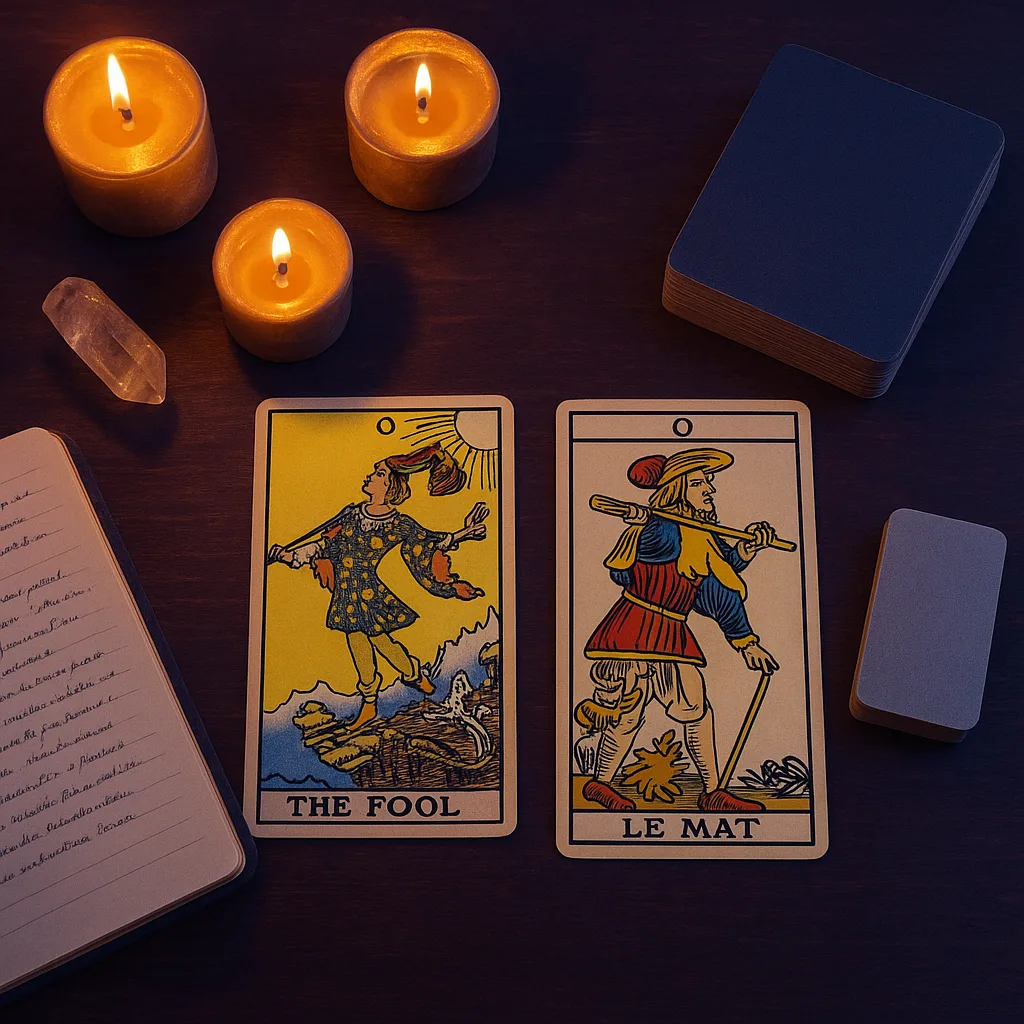
The Rider-Waite (also known as Rider-Waite-Smith) is today the go-to reference used by books, courses, and online content. Its signature feature is illustrating every card — including the minor arcana — with rich, figurative scenes: characters, landscapes, gestures, symbolic objects. That visual richness works almost like a narrative: even before memorizing meanings, you can 'read' a feeling just by looking at the image. That's why it's typically recommended as the friendliest entry point.
The Marseille Tarot, on the other hand, is an older tradition and, in a sense, more bare-bones: the minor arcana show only the suit and number of the card, with no illustrated scene. This calls for a more numerological and symbolic style of study, with less immediate visual support. It's a path highly valued by those interested in tarot history and more traditional European schools, but it tends to demand more dedication early on.
There's also a third category: artist or theme decks, with their own aesthetic and different names for the cards, inspired by the traditional structure but not necessarily following the same meanings. These can be beautiful and a real pleasure to work with, but it's important to study them as a separate system — a card's meaning there may not match what you learned in a classic Rider-Waite or Marseille guide.
How to Choose Your First Deck
In practice, a few criteria go a long way toward making a choice that will genuinely support your studies:
- Pick a deck with a guidebook in your own language. Having card meanings clearly explained in a language you're comfortable with is often the deciding factor between someone sticking with tarot and giving up in the first few weeks.
- Lean toward the classic Rider-Waite structure, at least for your first deck. Since most blogs, videos, apps, and courses use this visual reference, it's much easier to cross-reference what you're learning with other resources out there.
- Consider beginner-friendly editions with keywords printed right on the cards, including for the reversed position. They work almost like flashcards, helping you memorize meanings without constantly relying on the guidebook — a great tool if you're starting from absolute zero.
- Choose an aesthetic that speaks to you. Colors, linework, overall mood: you'll be handling this deck often, and genuinely liking how it looks matters more than you'd think for building a consistent study habit.
Busting a Myth: 'Your First Deck Has to Be a Gift'
You've probably heard this rule before: that someone's first tarot deck must be given to them as a gift, never bought by themselves. Feel free to drop this belief without a shred of guilt — it's folklore with no real basis, dating back to a time when using tarot cards was socially frowned upon and, in some places, even persecuted. Buying your own deck today is a fully accepted choice and, honestly, quite liberating: you get to research, feel out which deck resonates with your intuition, and decide at your own pace, without waiting for someone else to guess your taste.

Recomendado
Lewtemi Espelho de tarô acrílico tarô
Lewtemi Espelho de tarô acrílico tarô cartão decoração de parede mística presentes de bruxa para mulheres espaço sagrado cartomante espiritualidade astrologia bruxa magos arte decoração