Astrology Myths: 5 Common Misconceptions Worth Clearing Up
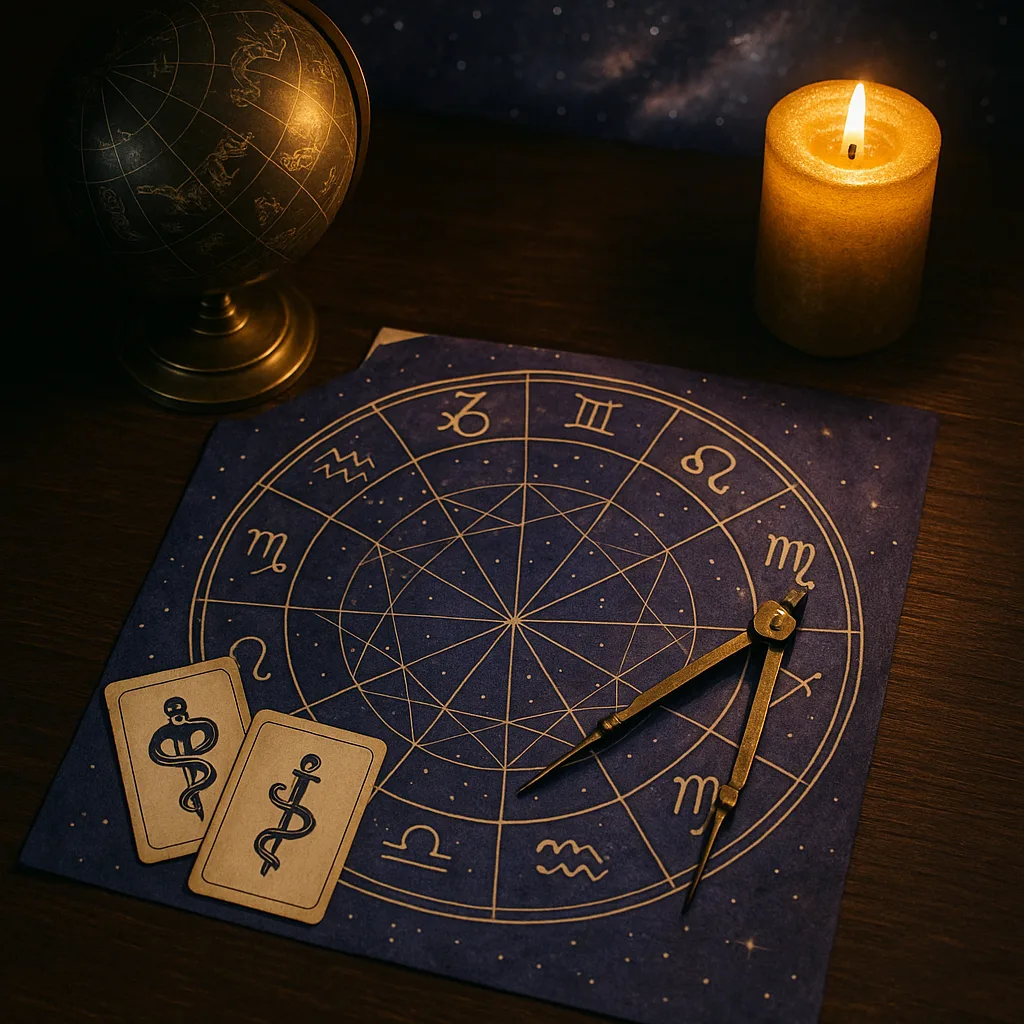
The sky is bigger than the myths told about it
If you've ever chatted about astrology with a group of friends, you've probably heard at least one of these lines: “well, that doesn't match my sign,” “NASA discovered a new sign,” or “astrology isn't legit because it's not science.” These myths have circulated for so long that they've become a kind of modern folklore — repeated with such confidence that few people stop to check where they actually came from. And the truth is that behind every rumor lies a curious story, a cultural misunderstanding, or an oversimplification worth untangling. Let's walk through these mix-ups one by one, with the same unhurried attention you'd give to stargazing: no rush, just a close look at the details.
Myth 1: your sun sign tells your whole story
This might be the oldest and most repeated misunderstanding of them all. Saying “I'm a Taurus” or “I'm a Pisces” as if that summed up an entire person is like judging a three-hundred-page book by its opening line. Your sun sign shows the essence of your vitality, what you're striving to shine at throughout life — but a full birth chart is made up of dozens of other layers: the Ascendant, which shapes how you present yourself to the world; the Moon, which reveals your innermost emotions; the houses, which show where in life each energy plays out; and all the other planets, each telling a different part of your story.
This myth gained traction in the early twentieth century, when newspaper and magazine horoscopes started becoming wildly popular. Since calculating a full chart requires an exact birth date, time, and location, the simplest way to deliver predictions to millions of readers was to rely on the sun sign alone — after all, you only need to know the day and month. This doesn't mean the Sun is 'more important' than the rest of the sky; it just means it was the easiest data point to get in an era without computers. Over time, that editorial shortcut became, in the public's mind, synonymous with astrology as a whole.
It's also worth remembering that many sign stereotypes carry cultural baggage far older than they seem. Scorpio gets labeled 'vindictive,' Virgo 'controlling' or 'too uptight' — yet Virgo, interestingly, is the only sign in the zodiac represented by a female figure, historically associated with care of the home. The judgment placed on this sign reveals more about old prejudices than any astrological truth. No sign is a closed sentence — each one is an archetype, a symbolic language that takes on different shades in every individual chart.
Myth 2: comparing two sun signs defines a relationship
It's tempting to think that asking 'do Aries and Libra get along?' is enough to predict a romance's fate. But that's quite the oversimplification. The real study of compatibility in astrology is called synastry: overlaying two complete charts and observing how one person's planets interact with the other's — not just the suns, but also the moons, Ascendants, Venus, Mars, and the angles formed between them. Two people who share the same sun sign pairing can experience completely different connections, because everything else in the chart changes the equation. Reducing love to a simple compatibility chart overlooks the depth astrology actually has to offer about human bonds.
Recomendado
Astro Reflexo
Descubra o que os astros revelam sobre quem você é. Em menos de um minuto, calculamos seu Sol, Lua e Ascendente com precisão astronômica e uma inteligência artificial escreve um resumo personalizado só para você.