Behind the Zodiac Curtain: The Hidden Stories Behind Astrology's Biggest Myths
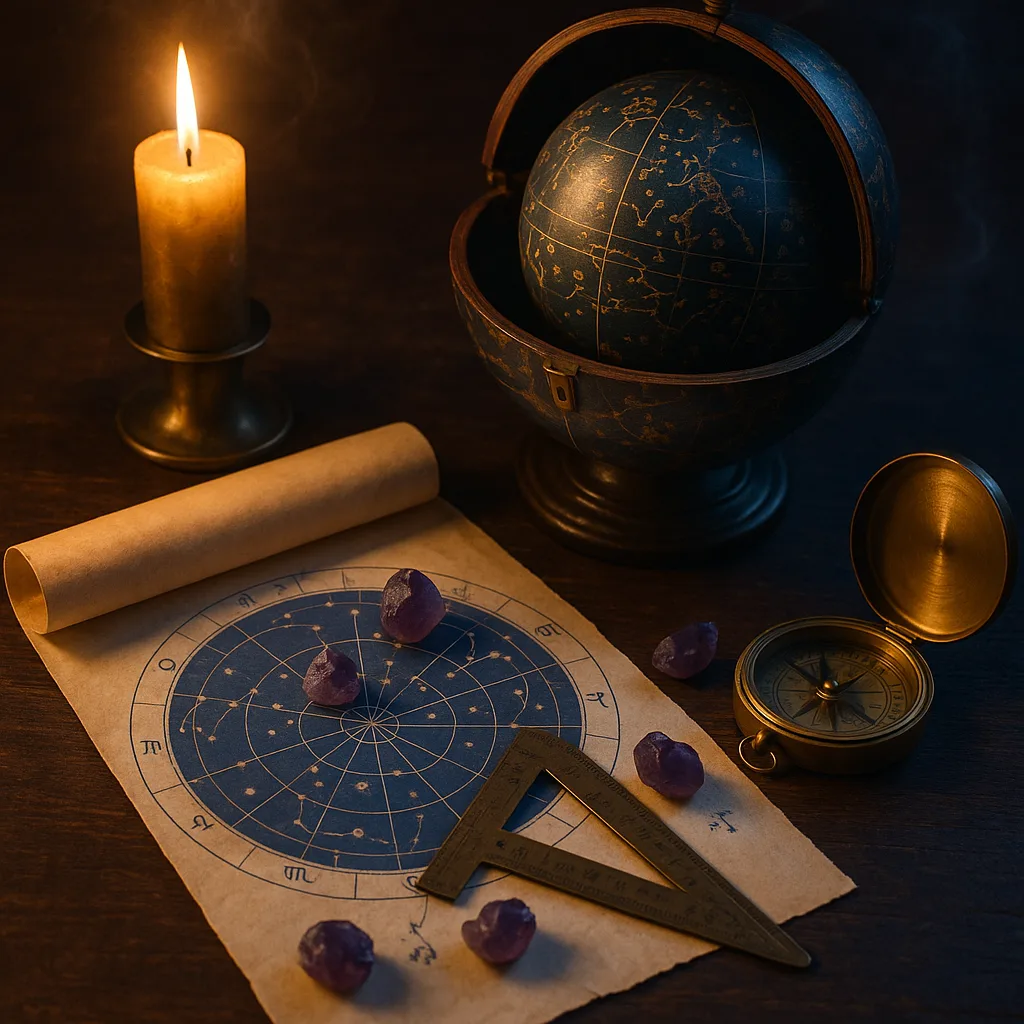
Why astrological myths keep coming back
Everyone's heard some version of these rumors: that there's a hidden sign no one ever told you about, that the full moon sends entire hospitals into chaos, or that Mercury, every so often, decides to travel backward across the sky. These myths get repeated so often that they almost start to feel true just from sheer momentum. But each one has a curious origin story — usually a mix of a real astronomical phenomenon with a dash of collective imagination. Let's open this treasure chest of curiosities with care, without stripping away astrology's magic, just bringing a bit more clarity for those who love this world.
1. 'My sign explains my whole personality'
This might be the oldest and most comforting myth of all, because it's so simple: you're born on a certain date, you get a sun sign, and that's supposed to be your complete portrait. But astrology has never worked in such a stripped-down way. The Sun is just one of ten celestial bodies considered in a birth chart — and in fact, all twelve signs appear somewhere in your chart, each one occupying a different house of your life.
That means two people born on the same day, but in different cities and at different times, can end up with charts that look completely different. The Moon reveals your emotional side, your rising sign shapes how you come across to the world, and every planet tells a different chapter of your story. Reducing all of that to 'I'm this sign, so I'm just like this' is a bit like judging an entire book by its back-cover blurb. It's a comforting myth, but it flattens the richness of what astrology is actually meant to reveal.
2. The rumor of the 13th sign 'discovered' by NASA
Every so often, this story resurfaces online: NASA supposedly 'discovered' a new sign called Ophiuchus (the Serpent Bearer) and rewrote the entire zodiac. It's such a persistent rumor that the space agency itself has had to respond — a spokesperson once clarified, almost with a sigh, that NASA studies astronomy, not astrology, and never had any intention of reshuffling anyone's sign.
Here's the interesting part: the constellation of Ophiuchus is real, and it's been known since antiquity. The Babylonians, who created the zodiac system we still use today, simply chose not to include it because it barely aligns with the Sun's apparent path as seen from Earth — the Sun only passes through it for about nineteen days, too short a stretch to earn its own 'month' within the traditional twelve-sign cycle.
There's also a lovely mythological detail tucked into this story: in Greek mythology, Ophiuchus was said to be the son of Apollo, and such a powerful healer that he could even bring the dead back to life. This unsettled Hades so much that Zeus, to keep balance between the realms, struck the young man down with a lightning bolt — and then turned him into a constellation, immortalizing him in the sky. In other words, Ophiuchus has always been up there; he just never got invited to join the circle of twelve.

Recomendado
Manual Prático da Astrologia
O universo sempre exerceu um fascínio indescritível sobre a humanidade. De todas as suas maravilhas, a astrologia se destaca como uma antiga arte que tem intrigado e inspirado gerações.

Recomendado
Astrologia, Simbolismo e Mapa das Personalidades
A astrologia acompanha a humanidade desde as primeiras grandes civilizações. A ideia de que a vida biológica na Terra pode ser influenciada pelos astros gerou e gera grande fascínio no homem.