Behind the Zodiac Curtain: The Hidden Stories Behind Astrology's Biggest Myths
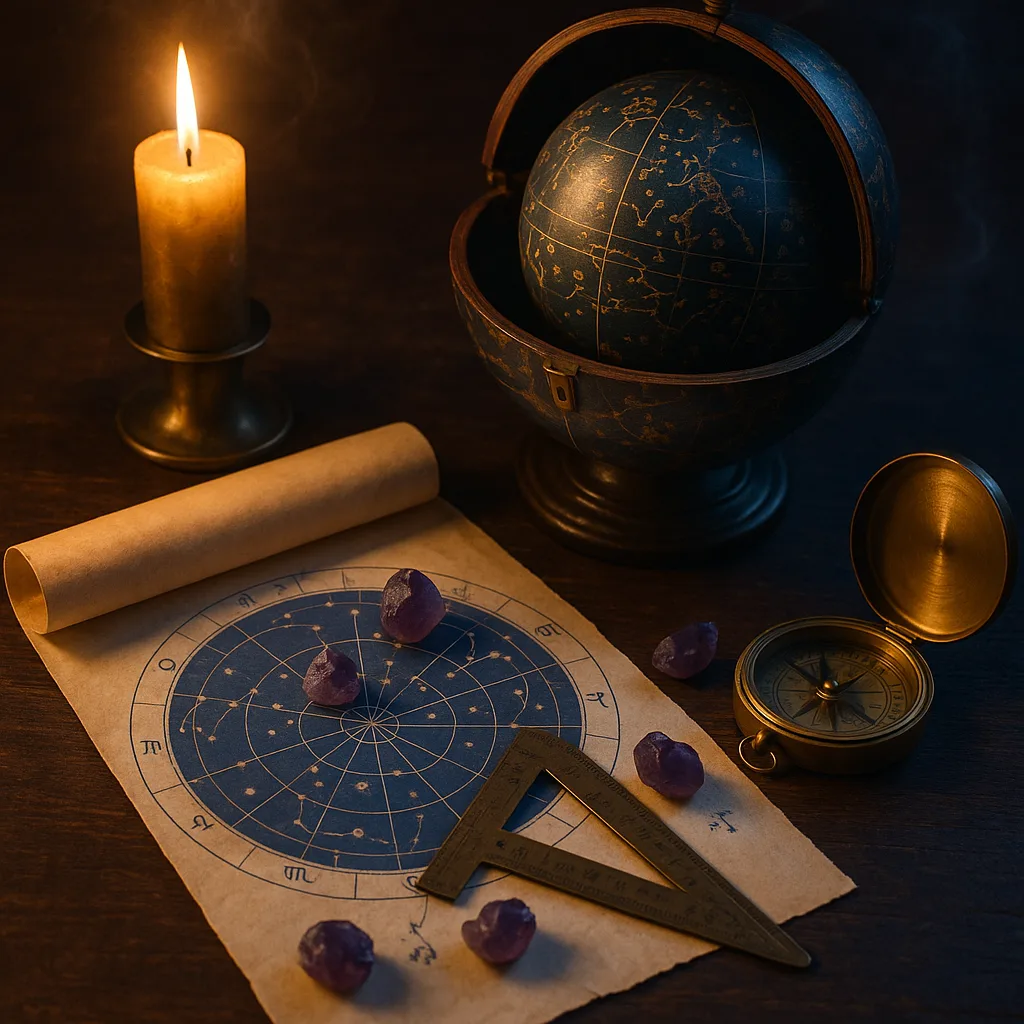
3. 'My real sign is actually something else' — the puzzle of the precession of the equinoxes
This is the only myth on this list born from a genuine astronomical phenomenon — just one that's often poorly explained. Earth, besides spinning on its axis and orbiting the Sun, also wobbles slowly like a spinning top losing momentum — a motion known as the precession of the equinoxes. This wobble shifts the position of the equinoxes relative to the fixed constellations at a rate of about one degree every 72 years. Over time, this shift has added up to roughly 24 degrees of difference between two separate systems: the tropical zodiac and the sidereal zodiac.
This is often used as evidence by those who claim 'your real sign' is actually something else — someone born on April 15th, for example, would be an Aries under the tropical system (used by Western astrology) but a Pisces under the sidereal system (used by Vedic astrology). The thing is, neither one is 'wrong' — they're simply different reference points built for different purposes. The tropical zodiac tracks the seasons and is geared toward psychological and symbolic readings; the sidereal zodiac tracks the physical constellations and tends to be used for longer astronomical cycles. For the vast majority of Western astrologers, precession simply doesn't factor in, because the signs are treated as archetypes tied to the seasons, not as literal snapshots of the starry sky.
4. 'Mercury is moving backward' — astrology's most famous optical illusion
Few phrases spook the public imagination quite like 'Mercury retrograde.' But physically, no planet in the solar system ever actually reverses its orbit — that would break the laws of gravity. What's really happening is a trick of perspective: since Earth and Mercury orbit the Sun at different speeds, there are moments when, from our vantage point, Mercury appears to be moving backward across the sky.
Think of passing a slower car on the highway: as you speed up and leave it behind, for a moment it looks like it's driving in reverse, even though it's still moving forward in the same direction as you. That's exactly the kind of optical illusion that makes Mercury appear to 'go retrograde' from our point of view three to four times a year, for about three weeks each time — and it's not alone in this: almost every planet goes through similar phases, with the exception of the Sun and Moon, which never go retrograde.
Another myth that tends to tag along is the idea that this period is off-limits for starting anything new. In practice, many astrologers suggest the opposite: it's actually a good time to review, wrap up loose ends, and pick back up on projects that stalled — the 're' prefix is a bit of a giveaway. And not everyone feels this transit the same way: since Mercury is a fast-moving personal planet, its effects tend to be subtle unless it's touching a particularly sensitive point in your individual chart.
5. The full moon and the myth of 'wilder' nights
Stories about packed emergency rooms, sudden arguments, and even spikes in births during full moon nights have traveled across generations and cultures — it's a belief so old it has outlasted the arrival of modern science. The explanation most often used to back it up is the Moon's gravitational pull, the very same force that drives the ocean tides.
The catch is that this force depends on large volumes of water moving freely, like seas and oceans — which is quite different from the water distributed throughout the human body, contained within cells and tissues, without the room needed to respond to tides the same way. That doesn't mean the full moon has zero effect on us: its symbolism of emotional intensity, climax, and revelation has been recognized in astrology for thousands of years. The key is understanding that this effect is symbolic and subtle, not some literal physical force rearranging entire hospitals in a single night.
An invitation to look at the sky with more curiosity
Deep down, each of these myths carries a thread of truth that got distorted somewhere along the way — whether it's a real astronomical phenomenon misread, or a cultural belief repeated so often it hardened into 'fact.' Understanding where these misunderstandings come from doesn't diminish astrology — if anything, it deepens how you can relate to it, trading automatic superstition for a more conscious reading of the sky, and of yourself.
Recomendado
Astro Reflexo
Descubra o que os astros revelam sobre quem você é. Em menos de um minuto, calculamos seu Sol, Lua e Ascendente com precisão astronômica e uma inteligência artificial escreve um resumo personalizado só para você.