Science and the Sky: 3 Famous Astrology Myths, Calmly Explained
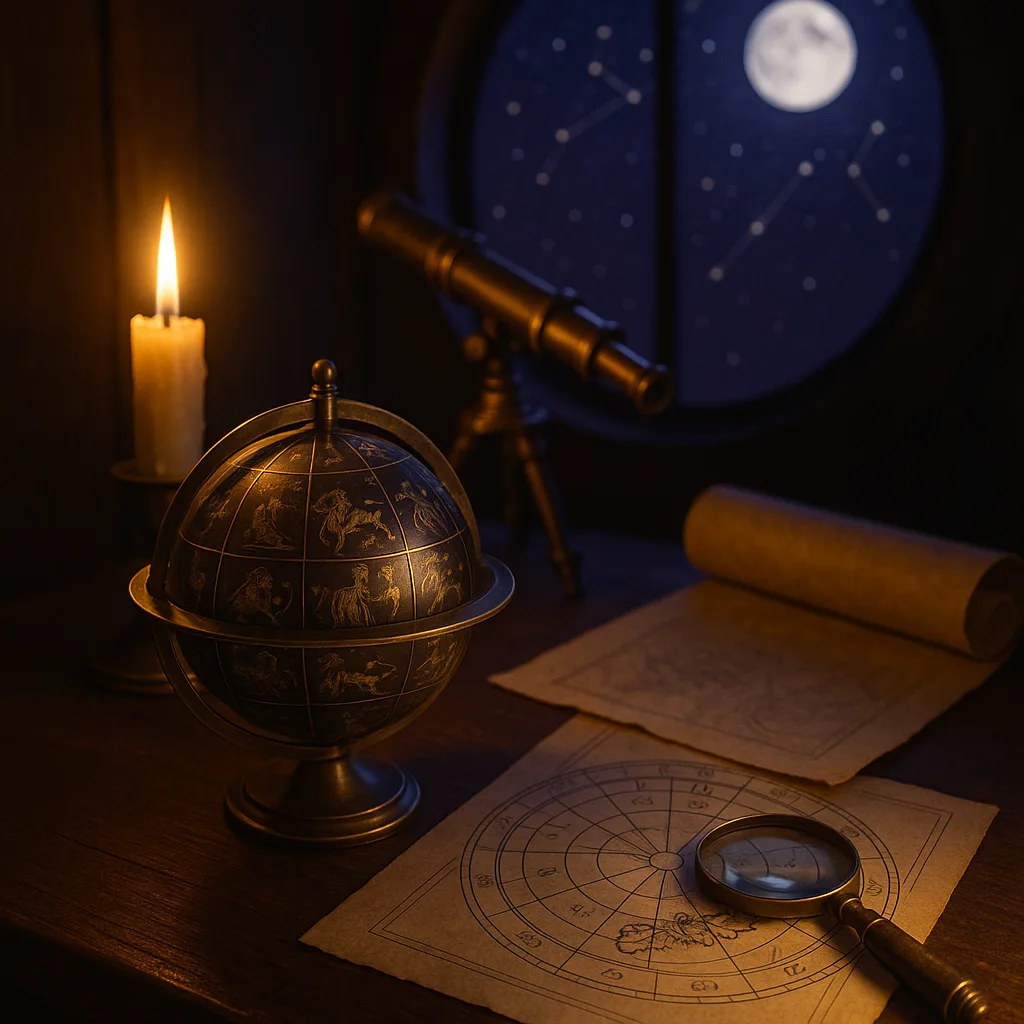
When the sky becomes a rumor: why certain astrology myths never die
Anyone who's ever taken even a passing interest in astrology has heard some version of these stories: that there's a hidden sign nobody ever told you about, that the full moon turns people into more impulsive versions of themselves, or that anything bad happening during a Mercury retrograde has a guaranteed explanation written in the sky. These ideas have been circulating for so long that they've practically become gospel truth — repeated among friends, in social media posts, in hallway chats.
But it's worth pausing for a moment to look carefully at these beliefs, not to discredit astrology — which is, above all, a symbolic language of self-knowledge — but to draw a clear line between proven astronomical phenomena, symbolic interpretation, and plain old rumors that spread a little too fast. Let's untangle three of these stories with the calm of someone who genuinely understands the sky.
Myth 1: 'NASA discovered a 13th zodiac sign and changed astrology'
This rumor resurfaced with a vengeance after the American space agency published an educational piece about constellations for kids back in 2016. The internet interpreted that as 'science just announced a new zodiac sign,' and collective panic swept through social media, with people rushing to check whether they were still the sign they'd always believed themselves to be.
NASA itself had to step in publicly to clear up the misunderstanding: it never changed the zodiac or created anything new. What actually happened was a historical explanation that many people simply weren't aware of. About three thousand years ago, the Babylonians — the first culture to systematize this reading of the sky — divided the Sun's path into twelve equal parts, linking each stretch of the calendar to a constellation. Technically, though, the Sun passes through thirteen constellations over the course of a year, not twelve. One of them, Ophiuchus, the 'serpent-bearer,' was left out for purely practical reasons: twelve signs fit neatly into twelve months, which made the system simple and workable.
Here's the confusion worth clearing up once and for all: a zodiac sign and a constellation are not the same thing. A sign is a symbolic, fixed 30-degree division used in astrology. A constellation is an actual cluster of stars in the sky, with irregular sizes and shapes — some take up far more space than others. That's why the Sun spends roughly 45 days 'crossing' the region of Virgo but only about a week passing through the region of Scorpio, astronomically speaking. These are two different reference systems, each with its own internal logic, and neither one invalidates the other.
To be fair, there is a small group of astrologers who work with what's called the true sidereal zodiac, which tries to track the actual boundaries of the constellations — and in that specific, minority approach, Ophiuchus is sometimes taken into account. But even within sidereal and Vedic astrology, which already uses a different reference point than the tropical zodiac more popular in the West, this '13th sign' tends to be treated with skepticism and rarely makes it into practiced birth charts. In other words: it's not the standard, it's the exception within the exception.
NASA made a point of clarifying that it doesn't study or validate astrology as a science — and it's right to keep the two fields separate, since they're completely different methodologies. But that doesn't make astrology 'wrong': it never claimed to be astronomy in the first place. It's an ancient symbolic tradition with its own internal coherence, one that engages with the sky in a very different way than a telescope does.

Recomendado
Manual Prático da Astrologia
O universo sempre exerceu um fascínio indescritível sobre a humanidade. De todas as suas maravilhas, a astrologia se destaca como uma antiga arte que tem intrigado e inspirado gerações.

Recomendado
Astrologia, Simbolismo e Mapa das Personalidades
A astrologia acompanha a humanidade desde as primeiras grandes civilizações. A ideia de que a vida biológica na Terra pode ser influenciada pelos astros gerou e gera grande fascínio no homem.