Science and the Sky: 3 Famous Astrology Myths, Calmly Explained
Myth 3: 'The moment Mercury goes direct, all the problems instantly disappear'
Few astrological phenomena carry as much fame as Mercury retrograde — and, at the same time, few are so misunderstood at their core. Let's get to the facts, no sugarcoating: Mercury never actually reverses its orbit. The planet keeps circling the Sun normally, exactly as it always has. What happens is a matter of perspective: since Mercury orbits faster than Earth, at certain times of the year it appears, from where we stand, to move backward across the sky — much like when a faster car overtakes yours on the highway and, for a moment, the lampposts in the background seem to move in reverse.
In 2026, this phenomenon happens three times, and here's a nice detail for anyone who loves an astrological calendar: on all three occasions, Mercury retrogrades in water signs — Pisces at the start of the year, Cancer in the middle of the year, and Scorpio at the end of October. Water is usually associated with emotion, memory, and sensitivity, so this particular cycle invites more heartfelt reflection than practical action.
Now, here's the myth worth addressing: many people believe the transit's symbolic effects begin and end exactly on the dates marked on the calendar. But even within astrological tradition itself, there's the concept of the retrograde shadow — the days before and after the period when Mercury appears stationary, seeming to 'pause' in the sky before changing direction. Astrologers generally consider that the effects start showing up faintly during that window and take some time to fully fade once the planet resumes its direct motion. In other words, the idea of 'instant relief' on the exact end date is itself another popular oversimplification of a more gradual process.
What it all comes down to
None of these three cases is about astrology 'versus' science, as if it were some kind of boxing match. They're different languages looking at the same sky: one measures, calculates, and explains physical mechanisms; the other interprets symbols, cycles, and meaning for human life. The problem is never astrology itself, but the rumors that form when the two languages get carelessly mixed together.
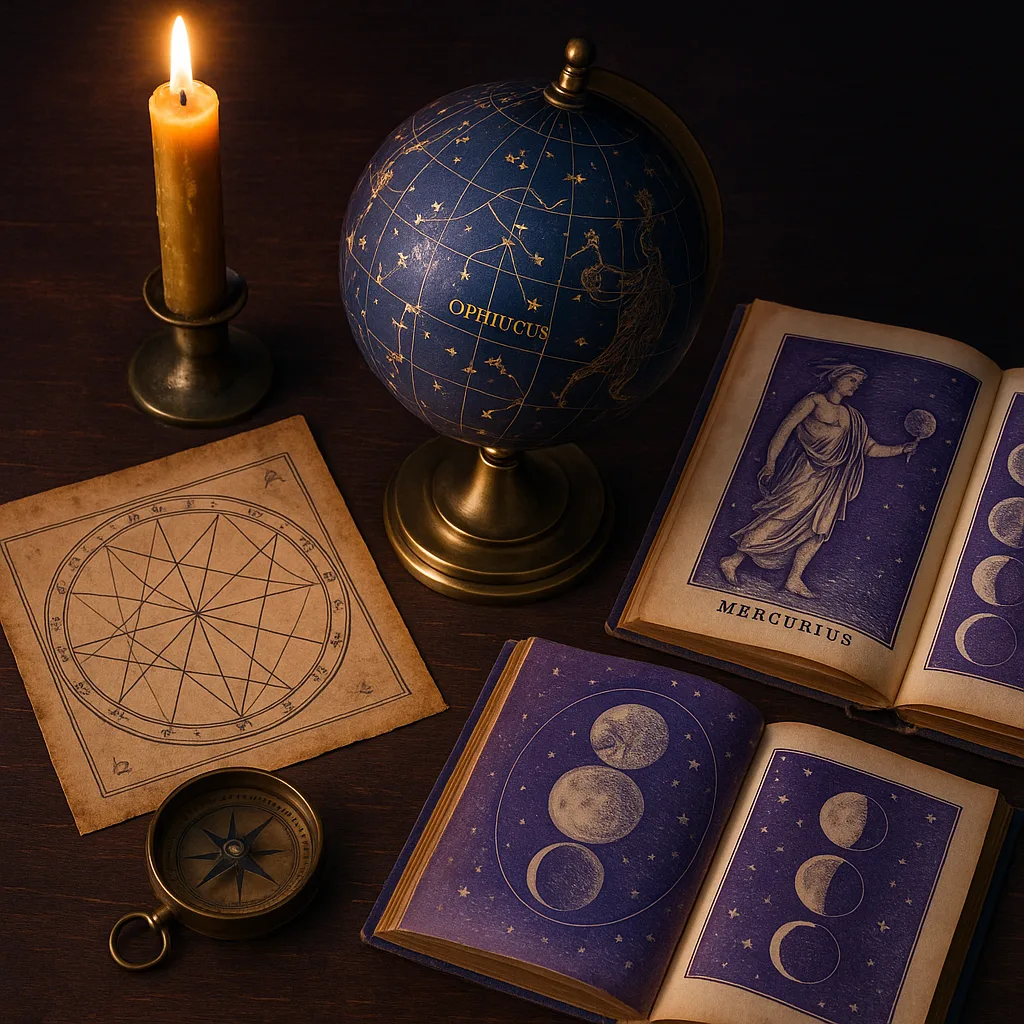
Knowing the real origin of these myths doesn't strip the magic from looking up at the sky — if anything, it makes the practice more honest and more beautiful. After all, understanding why Ophiuchus was left out of the Babylonian calendar, why the full moon subtly affects sleep, and why Mercury only appears to move backward is, in its own way, a form of reverence: it's acknowledging the real complexity of the sky that we choose, every day, to interpret with faith and curiosity.

Recomendado
Bruxaria e astrologia
Guia prático para entrar em sintonia mágica com os 12 signos do zodíaco