One Sky, Many Voices: How Every Civilization Built Its Own Astrology
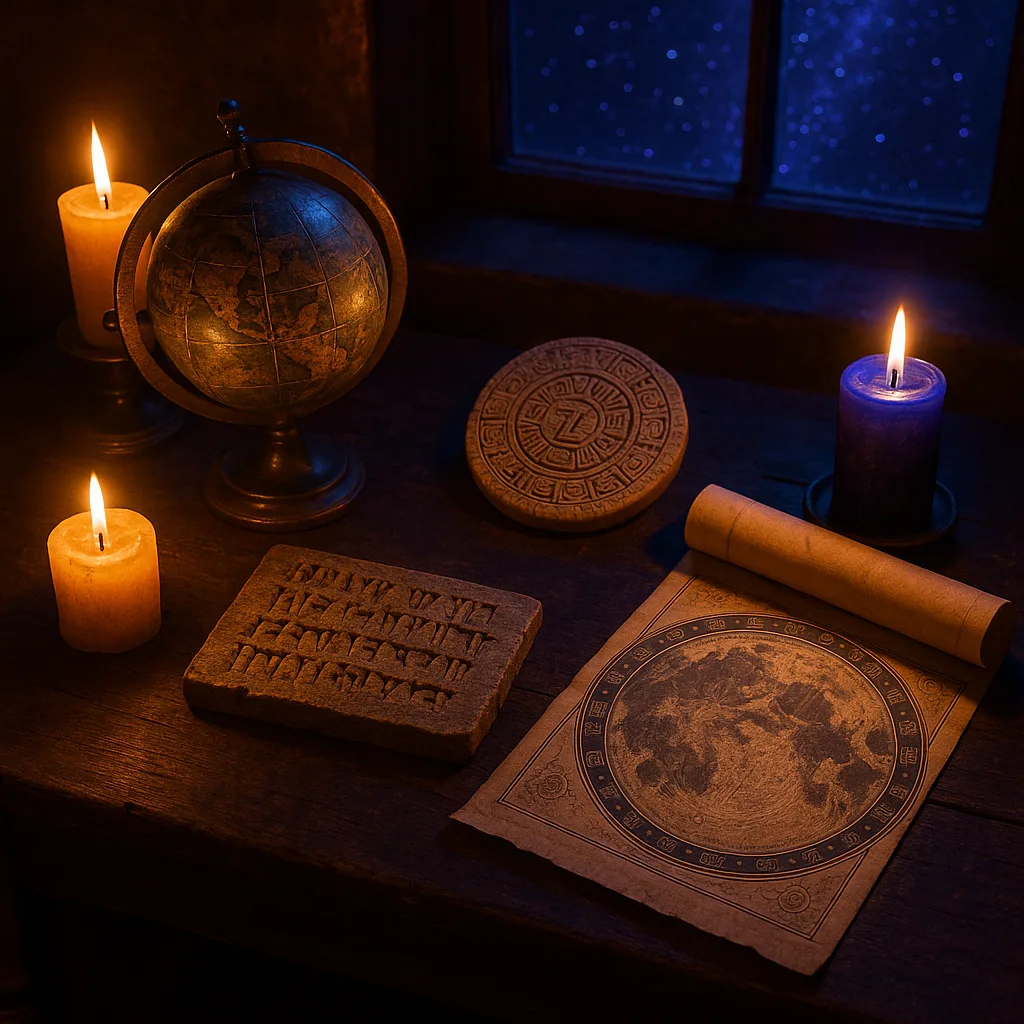
One shared sky, many ways of reading it
Long before there were borders, calendars, or names for the planets, people were already lying on the ground, staring up at the dark sky, trying to figure out what those lights meant. This is, perhaps, astrology's most honest seed: not the invention of a single people, but a universal human response to the mystery of being alive under a sky that shifts, pulses, and seems to hold secrets. What's fascinating — and rarely remembered — is that this response didn't happen just once. It sprang up, in parallel and independently, in different corners of the world, with each culture drawing its own symbolic map of the cosmos, complete with its own deities, rhythms, and priorities.
When we talk about astrology in the West, we almost always think automatically of the twelve signs of the tropical zodiac. But that's just one of humanity's astrological traditions, even if it has become the most widespread globally. This article takes a different approach: rather than following a single timeline, we'll travel through different civilizations — Mesopotamia, India, China, and the Maya world — to understand how each one read the sky in its own way, and what these readings have in common despite the distance between them.
Mesopotamia: the most familiar starting point
It's almost impossible to talk about astrology without passing through the ancient region between the Tigris and Euphrates rivers, where priest-astronomers recorded, with impressive discipline, the phases of the Moon, eclipses, and the slow march of the planets visible to the naked eye. For these peoples, the sky wasn't a distant backdrop: it was divine territory, where every planetary movement could signal wars, good harvests, or a king's fate.
This tradition matured over centuries, eventually producing striking compilations of celestial omens that linked the behavior of the stars to earthly events in an increasingly systematic way. This is also where the idea of dividing the sky into fixed sectors comes from — a concept later refined by the Egyptians and Greeks until it became the twelve-sign zodiac we know today. But even though Mesopotamia is a foundational root of Western astrology, it was far from the only place in the world where the sky was studied with such care.
India: the Moon's mansions and time as a sacred cycle
While the Babylonians organized the sky into solar bands, another great civilization — born on the banks of the Indus River — was developing its own way of tracking the stars, giving special prominence to the Moon. This is the tradition that gave us the concept of the nakshatra, a Sanskrit word that can be translated as something like 'the immortals': a set of lunar stations that divided the Moon's path across the sky into twenty-seven or twenty-eight segments, each with its own symbolic character.
This system gave rise to an astrology with a very distinct identity, known today as Jyotish, or 'the science of light,' deeply interwoven with Indian philosophy and spirituality. Unlike Western tropical astrology, Jyotish works with a sidereal zodiac, adjusted to the actual positions of the constellations in the sky, and places enormous weight on the position of the Moon at the moment of birth — not just the Sun. It's no exaggeration to say that, in this tradition, the Moon speaks as much as the Sun does for us — perhaps even more — about the emotional texture of a life.
Interestingly, this lunar emphasis also appears in other regions from around the same historical period, suggesting that the concept of lunar mansions may have circulated and blended among different ancient peoples, each adapting the idea to its own way of viewing time and destiny.
Recomendado
Astro Reflexo
Descubra o que os astros revelam sobre quem você é. Em menos de um minuto, calculamos seu Sol, Lua e Ascendente com precisão astronômica e uma inteligência artificial escreve um resumo personalizado só para você.