One Sky, Many Voices: How Every Civilization Built Its Own Astrology
China: the sky as a mirror of imperial order
On the other side of the Asian continent, an equally ancient astrological tradition developed with its own internal logic, deeply tied to the idea of balance between heaven, earth, and society. Traditional Chinese astrology wasn't born focused on individual destiny, as we tend to assume today: it was, above all, a tool of the state, used to guide the emperor's decisions, predict harvests, calculate favorable moments for ceremonies, and even justify — or challenge — the legitimacy of whoever sat on the throne.
In this worldview, the sky was divided into palaces and constellations associated with animals, elements, and cardinal directions, forming a cosmic map that mirrored the organization of the empire on Earth. Eclipses, comets, and unusual planetary positions were read as direct messages about the state of government, almost like a symbolic thermometer for the harmony between the heavens and human affairs. Over time, this tradition also gave rise to the twelve-animal system now popularly known as the 'Chinese zodiac,' tied to the lunisolar calendar and linked to one's year of birth — a very different logic from the West's division into solar signs, but just as sophisticated in its attempt to connect time, character, and destiny.
The Maya world: time as a sacred fabric
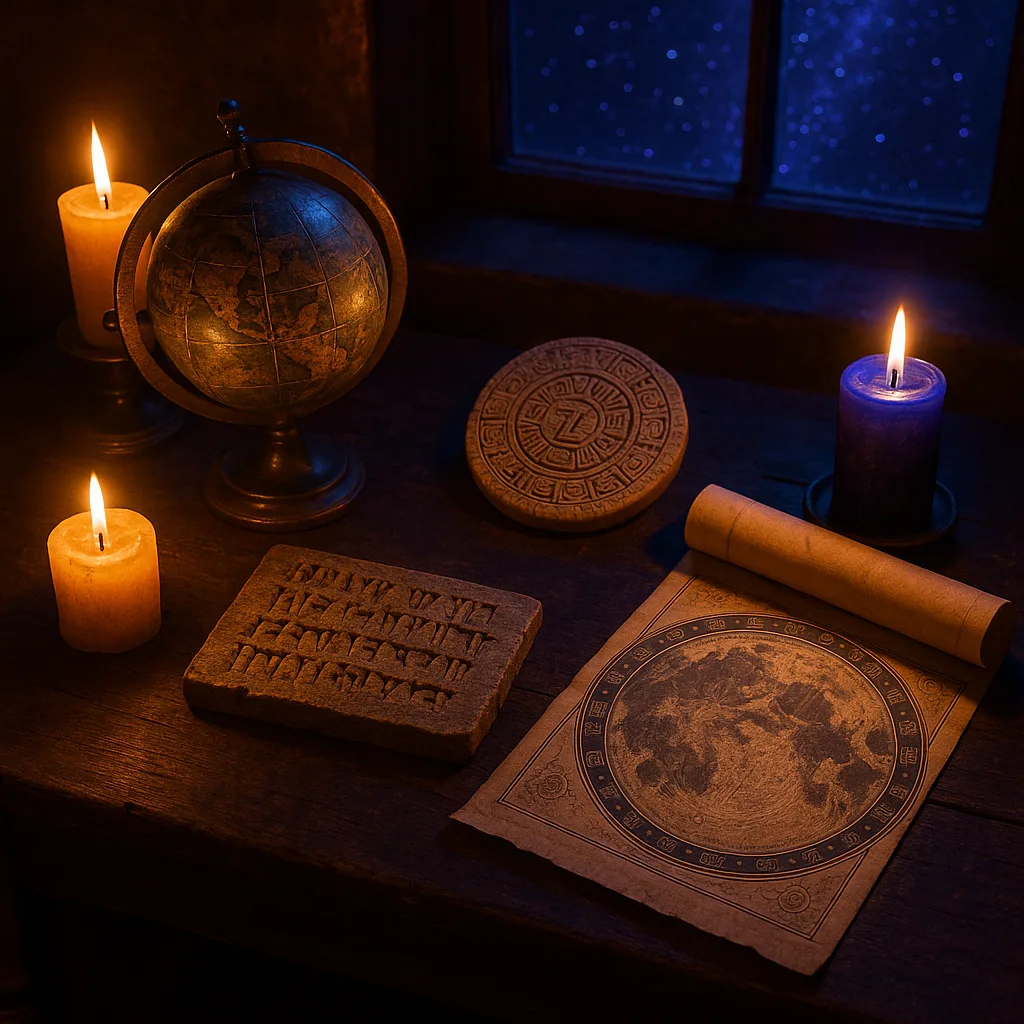
On the other side of the ocean, with no known contact with the traditions of Asia or Mesopotamia, the Maya peoples of Mesoamerica independently developed one of the most precise systems of celestial observation in the ancient world. For this civilization, time and cosmos were practically the same thing: interlocking calendars marked not just days and seasons, but also sacred cycles, each governed by specific energies and deities.
One of the best-known calendars, a 260-day cycle, worked in tandem with a longer solar calendar, creating a kind of cosmic gear system that only fully repeated itself once every many years — a powerful symbol of the idea that human life is woven into cycles far greater than itself. The Maya paid extraordinary attention to the movement of Venus, associated with war and transformation, as well as to the Sun and Moon, building predictions and rituals finely tuned to these movements. Just as in China and Mesopotamia, the Maya sky was never separate from collective life: wars were planned, ceremonies were scheduled, and kings were crowned according to what the stars seemed to authorize.
Greeks and Romans: where the traditions met
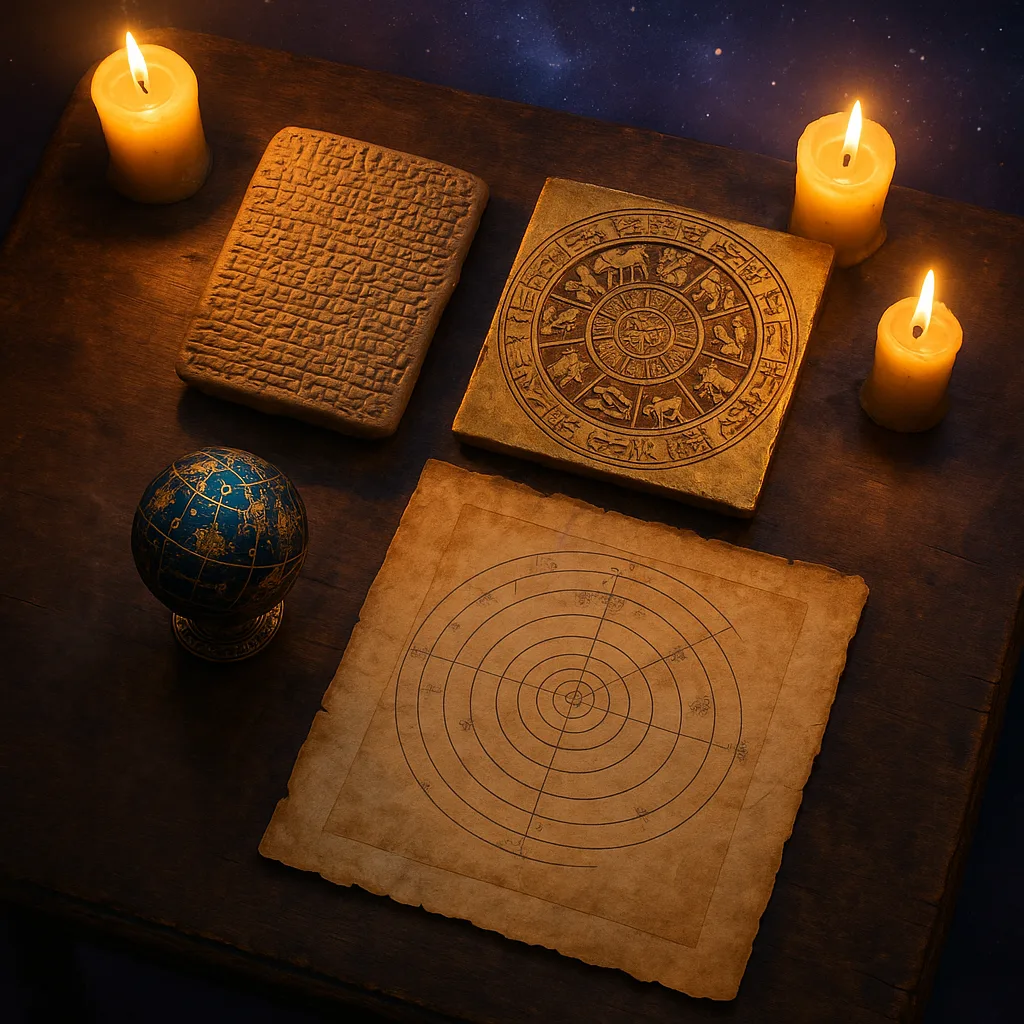
It was only later, during the Hellenistic period, that much of these traditions — especially the Mesopotamian and Egyptian ones — began merging into a system closer to what we practice in the West today. Greek astronomers and thinkers adopted the Babylonian division of the sky into twelve equal parts, added their own mythology, and, over time, created horoscopic astrology: the kind that calculates an individual chart based on a person's exact moment of birth, rather than omens aimed solely at kings and nations.
This systematization reached one of its most important milestones with a scholar who organized much of the astrological knowledge available in his era, filtering out techniques, discarding what he considered superstition, and consolidating a more structured approach that would become a reference point for generations of Western astrologers to come. It's this meeting of traditions — Babylonian, Egyptian, and Greek — that, centuries later, would reach Europe and, from there, the entire world, shaping the astrology most of us recognize today.
A mosaic, not a straight line
Looking at these different traditions side by side teaches us something important: astrology isn't a single invention that spread across the world, but a human impulse repeated, independently, by peoples who never encountered one another. Babylonians, Indians, Chinese, and Maya all shared the same basic intuition — that the sky and human life are somehow connected — but each answered that intuition with their own tools, symbols, and cultural priorities.
Perhaps it's exactly this diversity that keeps astrology so alive today: not a closed dogma, but a symbolic vocabulary that every culture, and every person, learns to speak in their own way.
The next time you look up at the night sky, it's worth remembering that, somewhere else on the planet, centuries ago, someone looked at those very same stars and saw in them a mirror for understanding their own existence — just with different eyes, a different language, and a different way of counting time.

Recomendado
Estátua Gato Bastet Egito Antigo
Inspiração Egípcia Autêntica Representa Bastet, a deusa egípcia da proteção, harmonia e energia feminina.