Missing Element in Your Birth Chart: Balancing Fire, Earth, Air & Water
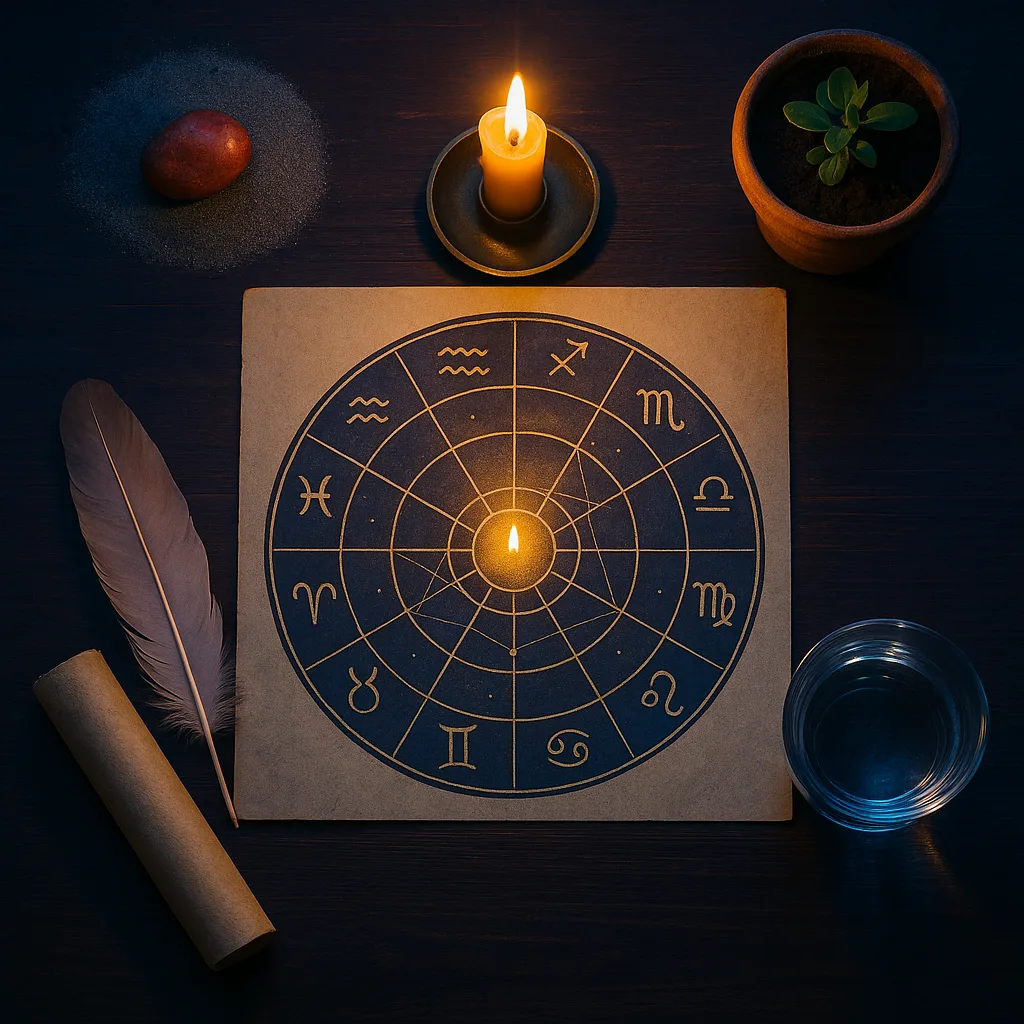
A bridge to psychology: the elements according to Jung
One crossover gaining traction in more contemporary readings is the parallel between the four elements and the four psychological functions described by Carl Jung. In this reading, each element corresponds to a way of processing experience:
- Fire — intuition: perceiving possibilities, envisioning the future, the insight that arrives before any logical explanation.
- Earth — sensation: contact with the present moment, the five senses, whatever can be touched and verified.
- Air — thinking: rationality, analysis, the search for logic and coherence.
- Water — feeling: evaluating through emotional worth, empathy, connection.
This correspondence isn't a fixed rule of classical astrology, but it helps a lot of people understand more concretely why certain people process the same situation so differently — one sees possibilities (fire), another wants data (earth), another wants to debate it (air), and another wants to know how it makes everyone feel (water).
Elements and modalities: the two halves of a sign's character
To truly understand a sign — or a planet placed in it — traditional astrology crosses the element with the modality (cardinal, fixed, or mutable). If the element describes what that energy is made of, the modality describes how it acts in the world: whether it initiates (cardinal), sustains (fixed), or adapts (mutable). Taurus, for example, is fixed earth — practicality that plants its feet and resists change. Capricorn, meanwhile, is cardinal earth — practicality that launches ambitious projects. It's this combination of two variables, element and modality, that gives the twelve signs their distinct personalities, even when they share an element or modality with one another.
The elements show up in tarot, too
Worth a symbolic side note: the four elements aren't exclusive to astrology. In tarot, the four suits of the minor arcana mirror the exact same logic — Wands represent fire (action, will, creativity), Cups represent water (emotions, bonds), Swords represent air (thought, conflict, mental clarity), and Pentacles represent earth (work, body, resources). Anyone who studies both systems quickly notices that fire, earth, air, and water function almost like a universal alphabet for describing human experience, running through different symbolic traditions.
How to look at your own chart through this lens
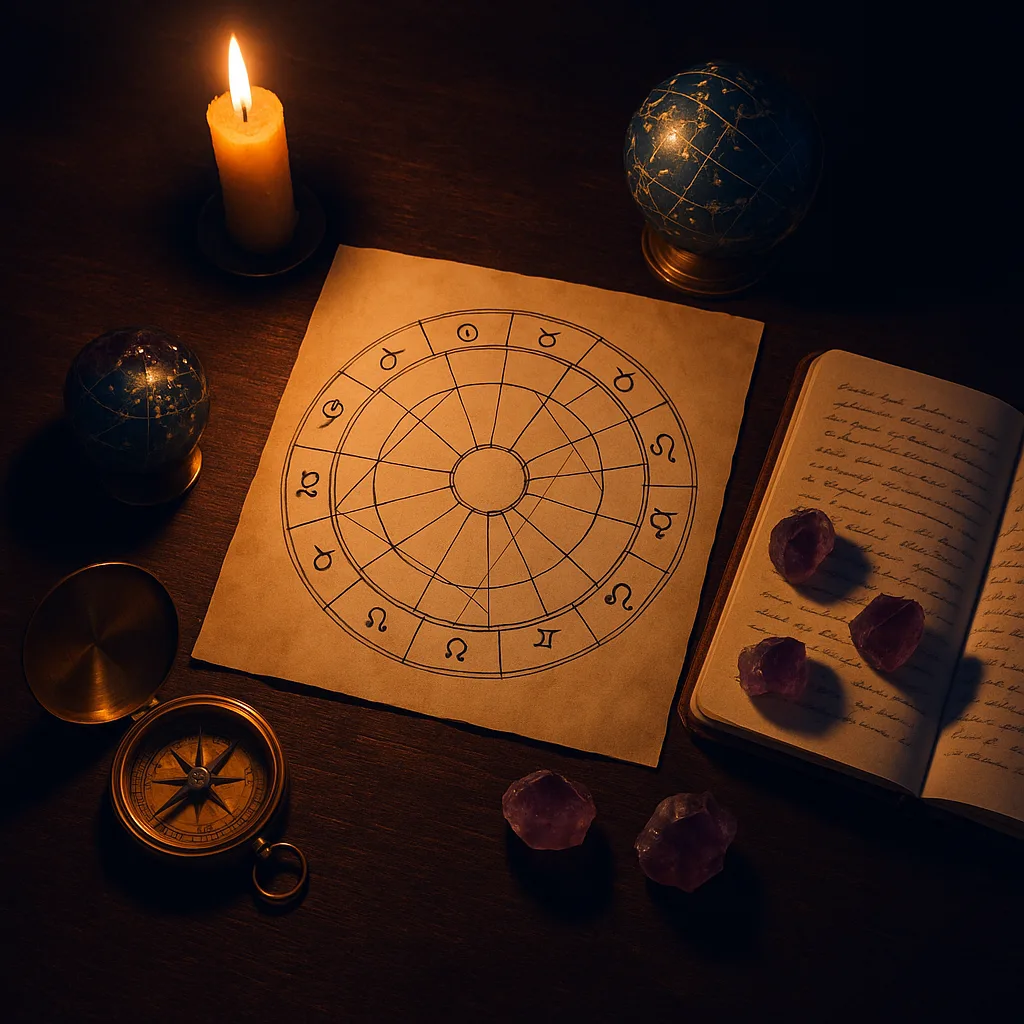
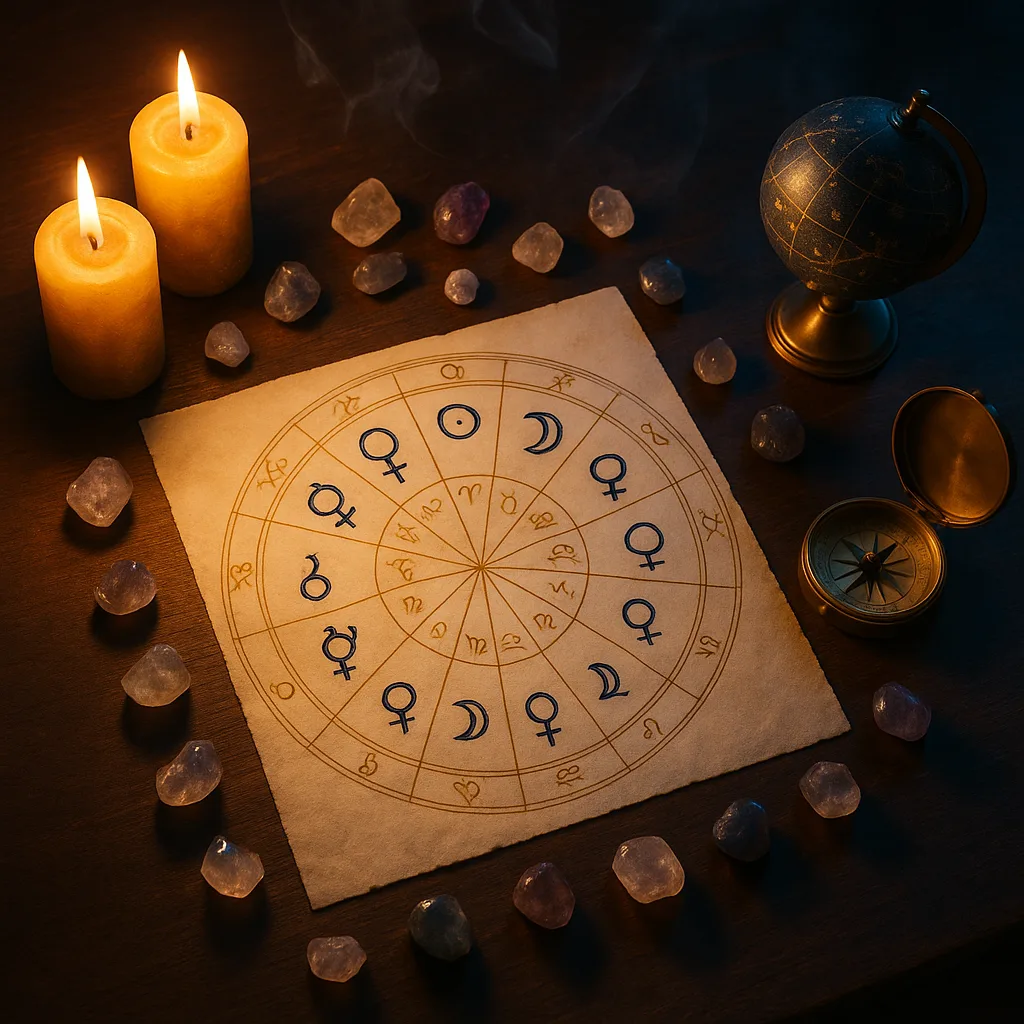
If you already have access to your full birth chart, a simple way to start this kind of observation is to look at the element of each personal planet (Sun, Moon, Mercury, Venus, and Mars) plus your ascendant. Notice if any element repeats several times — a sign of strength — or if any element simply doesn't show up at all in those points — a sign of a shortage worth working on, not as a flaw, but as an invitation for growth.
Keep in mind that an excess element isn't a life sentence, and a missing element isn't a permanent limitation: these are tendencies the chart points out for you to notice in your own life, with curiosity rather than judgment. That's the real beauty of the four elements — they don't compete with each other, they complete each other. A chart with fire, earth, air, and water well distributed tends to find, over time, its own way of balancing action and pause, reason and feeling, matter and spirit.

Recomendado
Manual Prático da Astrologia
O universo sempre exerceu um fascínio indescritível sobre a humanidade. De todas as suas maravilhas, a astrologia se destaca como uma antiga arte que tem intrigado e inspirado gerações.