The 13th Sign, ‘Astral Hell’ and Other Astrology Myths, Debunked
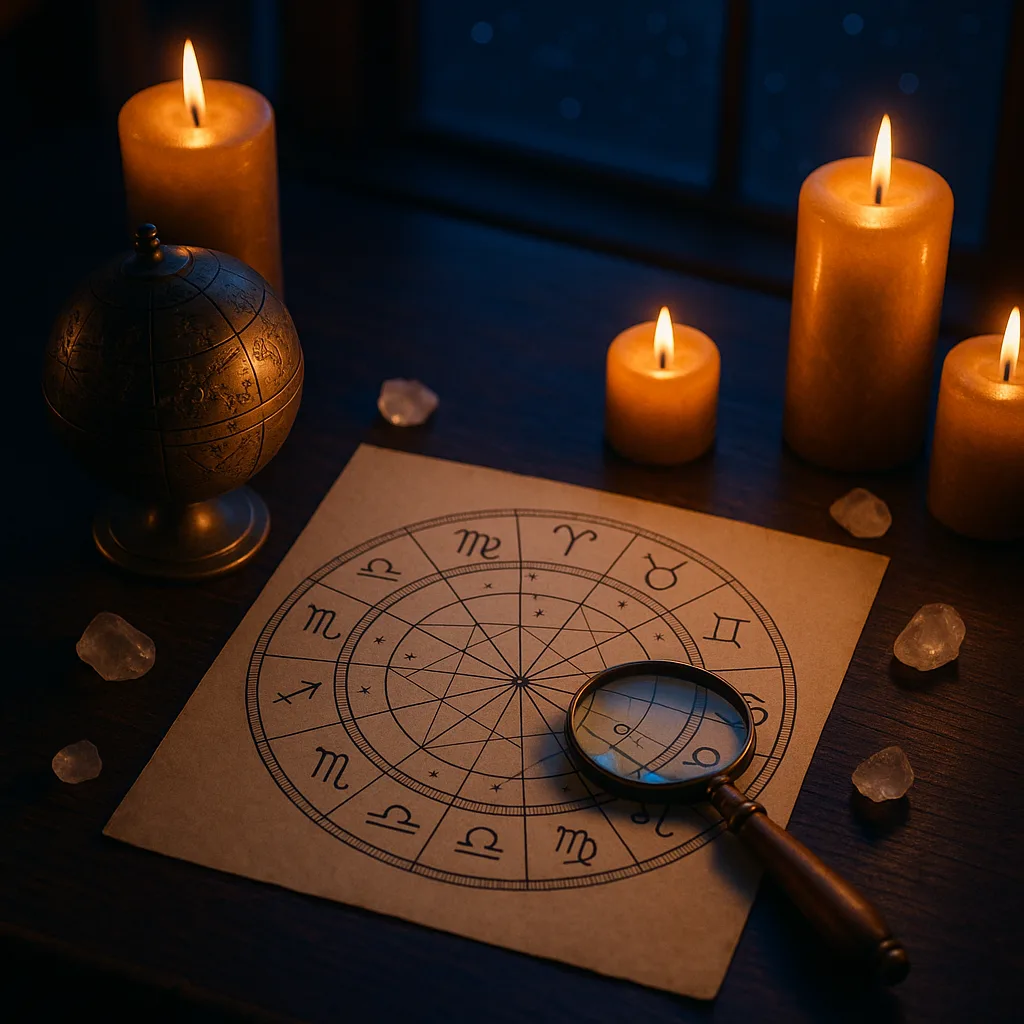
The sky has many voices, but not all of them tell the truth
Whether you've been exploring astrology for decades or just a few weeks, you've probably run into some claim that sounded a little too strange to be true — yet still spread like wildfire across social media. That happens because astrology is such a powerful symbol: everyone wants to weigh in on it, but not everyone has actually taken the time to study it in depth. In this article, we're going to gently and non-judgmentally clear up some of the most persistent misunderstandings surrounding the zodiac. The goal isn't to point fingers at anyone who's believed them — honestly, almost all of us have at some point — but rather to trace where each myth came from and give the sky back the complexity it deserves.
The 13th sign rumor: did NASA mess with your birth chart?
Every so often, a story resurfaces online claiming that NASA has discovered or created a brand-new zodiac sign called Ophiuchus, throwing the whole zodiac system we know into chaos. The rumor usually comes with alarming graphics suggesting everyone needs to scramble and figure out their 'real' sign overnight. But as convincing as it sounds, this is a distortion that's been recycled for more than a decade.
The truth is much simpler: NASA doesn't work with astrology at all. The space agency focuses on astronomy — the science that studies celestial bodies physically and observationally, with no interest in the symbolic reading that astrology offers. What does exist is a constellation called Ophiuchus, which the Sun does pass through along its apparent path across the sky. The ancient Babylonians, who created the zodiac system we still use today, already knew this constellation existed — they simply chose not to include it, since they wanted a tidy system of twelve divisions that matched their twelve-month calendar.
That choice wasn't an oversight or a mistake — it was a deliberate decision to build an organized, symmetrical model. And here's an important detail for understanding how the astrological zodiac actually works: constellations vary wildly in size and shape. The Sun spends around forty-five days in the region tied to Virgo, but only about seven days in the area linked to Scorpio. If the zodiac were based strictly on the physical constellations, the signs would have wildly uneven, chaotic durations.
That's why the zodiac guiding your birth chart isn't a literal slice of the starry sky — it's a geometric projection built from the relationship between the Earth and the Sun over the course of a year. As experienced astrologers explain, the name given to each sign — Taurus, Pisces, Leo — is a tribute to the constellations, not an exact copy of them. Constellations drift slowly across the sky over time; the signs, in the tropical zodiac used by most Western astrologers, stay fixed as a symbolic reference point. In other words: your sign hasn't changed, and no space agency has the power to rewrite your astrological essence.
Tropical zodiac vs. sidereal zodiac: why there are two different skies
One of the deepest roots of this whole confusion is the existence of two separate zodiac systems: tropical and sidereal. Understanding the difference clears up a huge chunk of the rumors floating around.
The tropical zodiac, most widely used in the West (and in Brazil), starts from the spring equinox — the moment the Sun crosses the celestial equator — and divides the zodiacal circle into twelve equal thirty-degree segments, functioning like a symbolic, seasonal calendar. The sidereal zodiac, a strong tradition within Vedic astrology, instead uses the actual position of the fixed stars in the sky as its reference point.
Because the Earth undergoes a slow wobble on its rotational axis — a phenomenon called the precession of the equinoxes — these two systems have gradually drifted apart over the centuries. Today, the gap between them adds up to roughly twenty-four degrees, which is enough for someone with a tropical Sun in Leo to show up as a sidereal Sun in Cancer. This shift happens extremely slowly: the equinoxes move about one degree every seventy-two years, completing a full cycle over roughly twenty-five thousand eight hundred years.
Neither system is right or wrong — they're simply two different languages for speaking with the sky, each with its own internal logic.
For most Brazilian astrologers, who work within the tropical system, this difference isn't a problem to be fixed — it's simply an alternate way of reading the sky. The tropical zodiac speaks to the seasons and the energetic archetypes tied to that cycle; the sidereal zodiac speaks to the actual position of the stars. Comparing the two is a bit like comparing the Gregorian calendar, with its unevenly sized months, to a system of twelve identical slices — both organize time, just according to different logics.
Recomendado
Astro Reflexo
Descubra o que os astros revelam sobre quem você é. Em menos de um minuto, calculamos seu Sol, Lua e Ascendente com precisão astronômica e uma inteligência artificial escreve um resumo personalizado só para você.