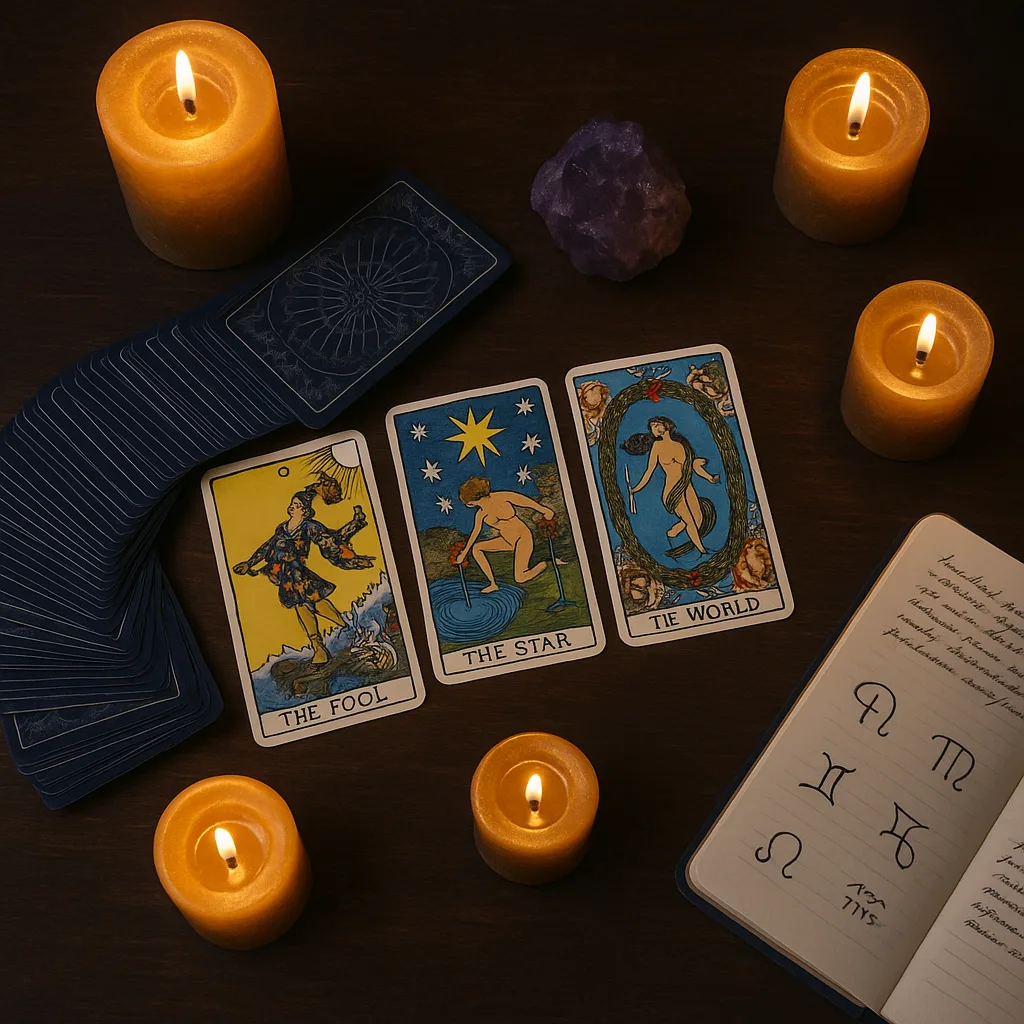
The Fool's Journey: A Map to Understanding the Major Arcana and Studying Tarot with Purpose
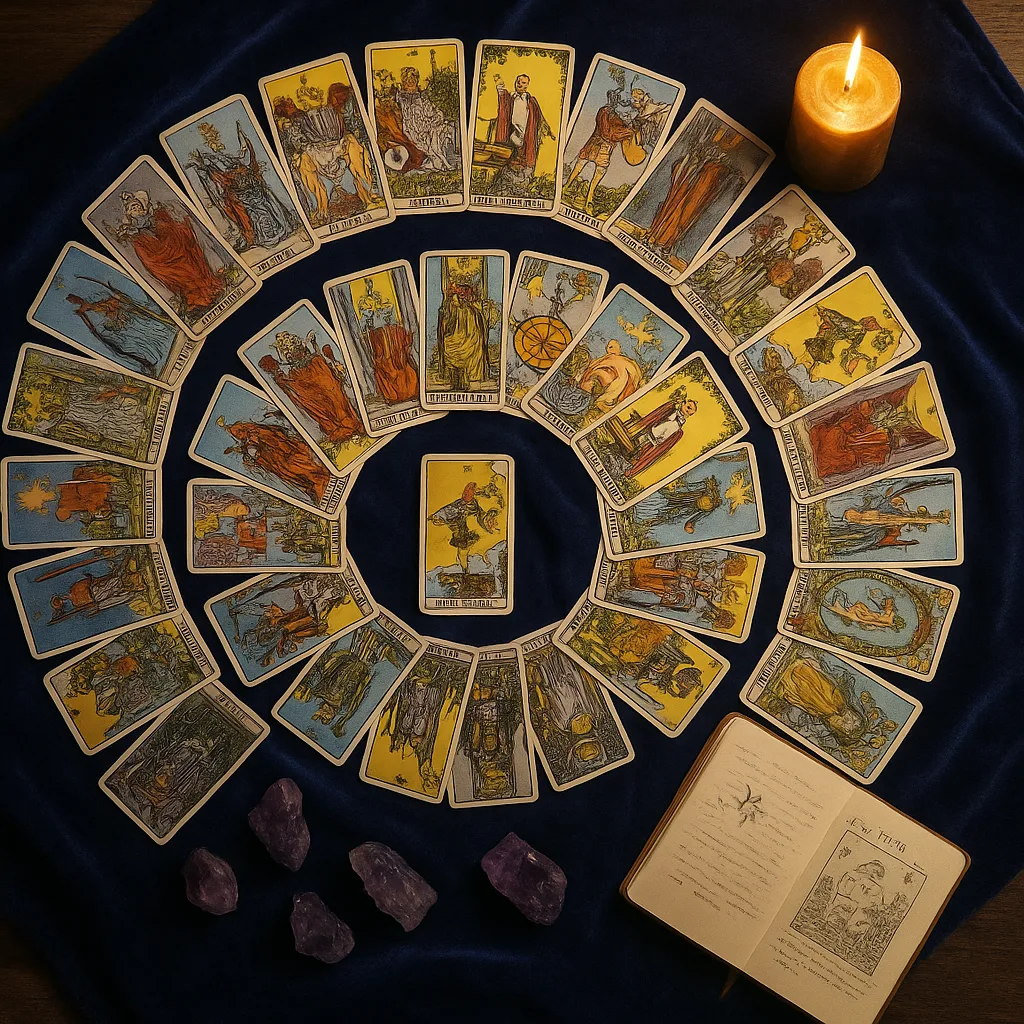
Where to start: choosing your first deck
An almost universal question for anyone wanting to study tarot is: which deck should I buy? Tarot cards have existed since the mid-15th century, when they emerged in Italy as a parlor game — it wasn't until the 18th century that they took on the more divinatory, reflective use we know today. Over the centuries, several visual traditions have emerged, but two tend to stand out most when someone decides to begin.
- Marseille Tarot: one of the oldest and most traditional decks, with simpler, more symbolic imagery. It's beautiful and deep, widely used in European tarot schools, but it can demand denser study right from the start, since most of the Minor Arcana don't show illustrated scenes — just repeated suit symbols.
- Rider-Waite-Smith (RWS): created in 1909 by Arthur Edward Waite, with illustrations by Pamela Colman Smith, this is today the most popular deck among beginners. The key difference is that all 78 cards, including the Minor Arcana, feature fully illustrated scenes — which makes intuitive reading much easier, since the image itself suggests a narrative even before you open the little guidebook.
If you're just starting this journey, it's worth considering beginning with the Rider-Waite-Smith deck (or one of its many derivative versions). Later on, once you're more familiar, the Marseille Tarot can become a more advanced, historical study — almost a second stage of your training.
How to study tarot without drowning in meanings
A common mistake for beginners is trying to memorize all 78 meanings like a cram-session chart. Tarot works best when it's felt, not just read. A few practices can really help in the early stages:
- Start with just the 22 Major Arcana. Set the Minors aside for a while. Truly understanding the core archetypes already gives you a solid foundation for everything that follows.
- Look at the image before reading the meaning in the book. What does this scene make you feel? What emotion, color, gesture, or symbol catches your attention first? Then compare it to the traditional meaning — often your intuition was already on the right track.
- Draw one card a day. No question, no elaborate reading. Just pull a card in the morning and carry that energy as a theme for reflection throughout the day.
- Keep a tarot journal. Write down the card of the day, what it stirred in you, and anything meaningful that happened in your routine. Over time, this notebook becomes your own symbolic dictionary, richer than any published book.
- Study the Fool's Journey in chunks. Instead of memorizing all 22 cards at once, break them into groups of three or four and observe how they speak to one another within the narrative.
A compass, not a verdict
It's always worth remembering: a tarot reading isn't a sealed verdict on your future, but an invitation to look more closely at where you stand right now and what paths open up from there. The Major Arcana exist to help you recognize the great movements of your own story — when you're in a Fool phase, risking a new beginning; when it's Hermit time, needing silence to find yourself; or when you finally reach the fullness of The World, before setting off again, wiser, on a new turn of the wheel.
Studying tarot is, at its core, learning to recognize these archetypal stories within yourself. And like any symbolic journey worth its salt, it's in no hurry: it can begin with a single card in your hand and a heart willing to listen to what it has to say.

Recomendado
Estátua Gato Bastet Egito Antigo
Inspiração Egípcia Autêntica Representa Bastet, a deusa egípcia da proteção, harmonia e energia feminina.