The Origins of Astrology: A Journey Through the Peoples Who First Read the Sky
Greece: when astrology became a system
If Mesopotamia provided the raw material and Egypt contributed the calendar and the decans, it was in Greece, especially during the Hellenistic period, that astrology gained the theoretical structure we still recognize today. The most important name of this era is Claudius Ptolemy, an astronomer and astrologer who lived in Alexandria in the 2nd century CE and wrote two foundational works: the Almagest, devoted to astronomy proper, and the Tetrabiblos, its astrological counterpart, which gathered the rules, foundations, and history of the discipline up to that point.
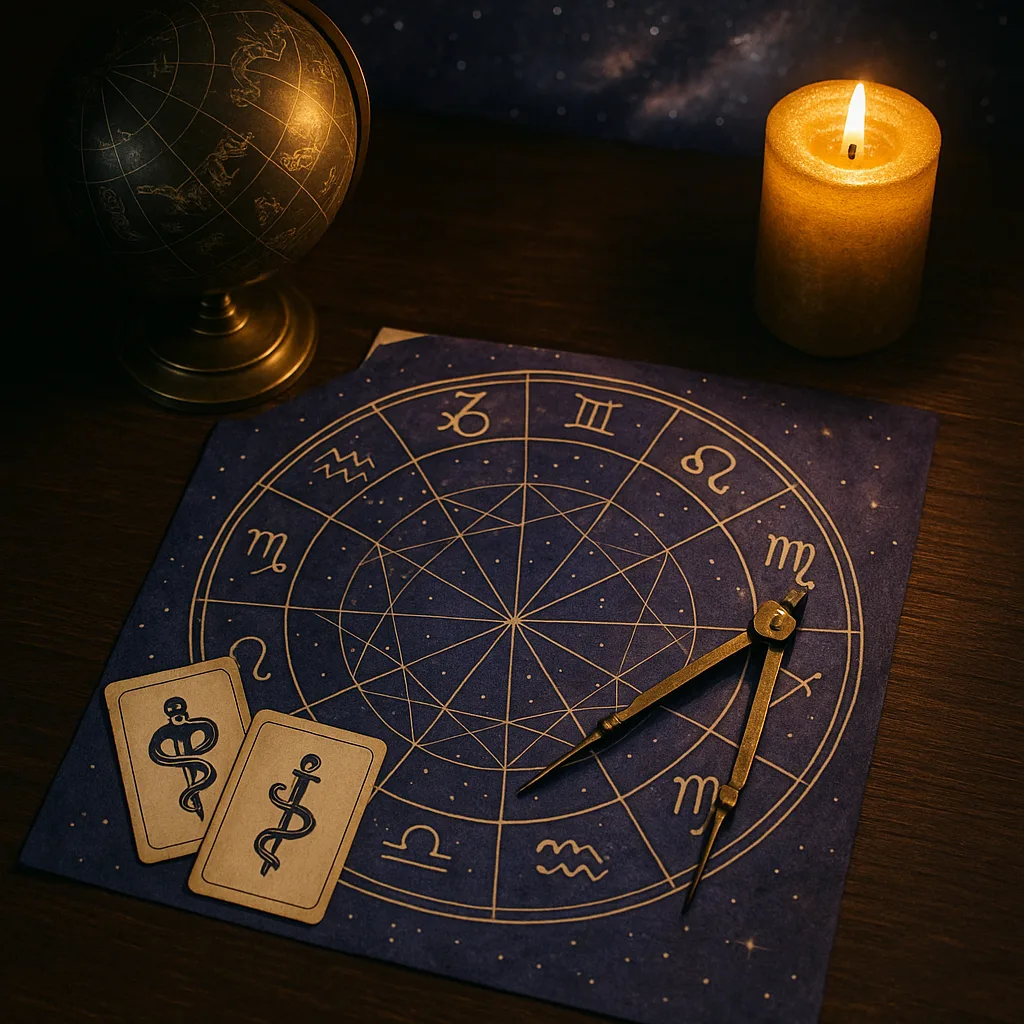
It was Ptolemy who consolidated the use of the zodiac created by Hipparchus, a system that begins counting from the spring equinox rather than from the actual position of the constellations in the sky. This technical choice is the root of the difference that still exists today between the tropical astrology used in the West and the sidereal astrology practiced in the Vedic Indian tradition — two legitimate ways of organizing the very same sky, each with its own internal logic.
It's worth remembering that this systematization didn't happen in a vacuum: it was in dialogue with Greek philosophy of the time, especially with ideas found in Plato's Timaeus about the soul of the world and the harmony between the heavens and human existence. Another notable name from this period is Vettius Valens, a contemporary of Ptolemy, whose work Anthology compiles over a hundred interpreted real-life birth charts — a rare practical record of how Hellenistic astrology was actually applied in people's daily lives. Interestingly, this body of knowledge nearly faded from memory over time, only regaining momentum starting in the 1990s, when a movement of translators and researchers began recovering original Greek texts — an effort that still fuels today's growing interest in what's now called traditional astrology.
India: the Lord of Light and Vedic astrology
Much further east, India developed its own astrological tradition, known as Jyotisha — a Sanskrit word combining jyoti, meaning light, and isha, meaning lord, forming something like 'lord of light,' a direct reference to the Sun, Moon, planets, and stars. Jyotisha holds a place of prominence among the six traditional branches of Vedic study, considered the oldest of them all, originally created for a rather practical purpose: establishing a reliable calendar for rituals and harvests.
There is, however, an interesting scholarly debate about just how ancient this astrology truly is compared to the Vedas themselves. The systematized written records we know of are considerably later, developed mainly in medieval texts dating after the 7th century. Some hypotheses suggest this tradition formed through contact between Indo-Aryan peoples and Babylon, via the first Persian empire; others point to a more direct Hellenic influence, arriving in India after Alexander's conquests. In the great Indian epics, such as the Ramayana and the Mahabharata, what we still find is something simpler: electional astrology, dream interpretation, and the reading of physical traits — not yet the complex system of birth charts that would develop later, with texts such as the Brihat Parashara Hora Shastra, attributed to the sage Parashara.
One sky, many languages
What this journey through different cultures reveals isn't that one tradition copied another, but that the impulse to seek meaning in the sky seems to be nearly universal. Mesopotamians, Egyptians, Greeks, and Indians — each in their own time and with their own symbols — felt the same thing many of us still feel today when looking up on a clear night: the sense that there's a conversation happening between what's above and what's below, between the cosmos and everyday life.
The astrology we practice today is, in essence, a mosaic: a bit of Babylonian precision, a touch of Egyptian symbolism, the Greek theoretical framework, and Vedic spiritual depth, all of it crossing centuries to finally reach our hands.
Getting to know these origins isn't just an exercise in historical curiosity — it's also a way of honoring astrology with greater depth, understanding that when we look at our own birth chart today, we're taking part in a conversation that began long before us, among peoples who never met but who shared the same silent question beneath the starry sky: what does all of this mean for us?

Recomendado
Estátua Gato Bastet Egito Antigo
Inspiração Egípcia Autêntica Representa Bastet, a deusa egípcia da proteção, harmonia e energia feminina.