Where Do Astrology Myths Come From? The Curious Story Behind the 13th Sign, Mercury Retrograde, and the Full Moon
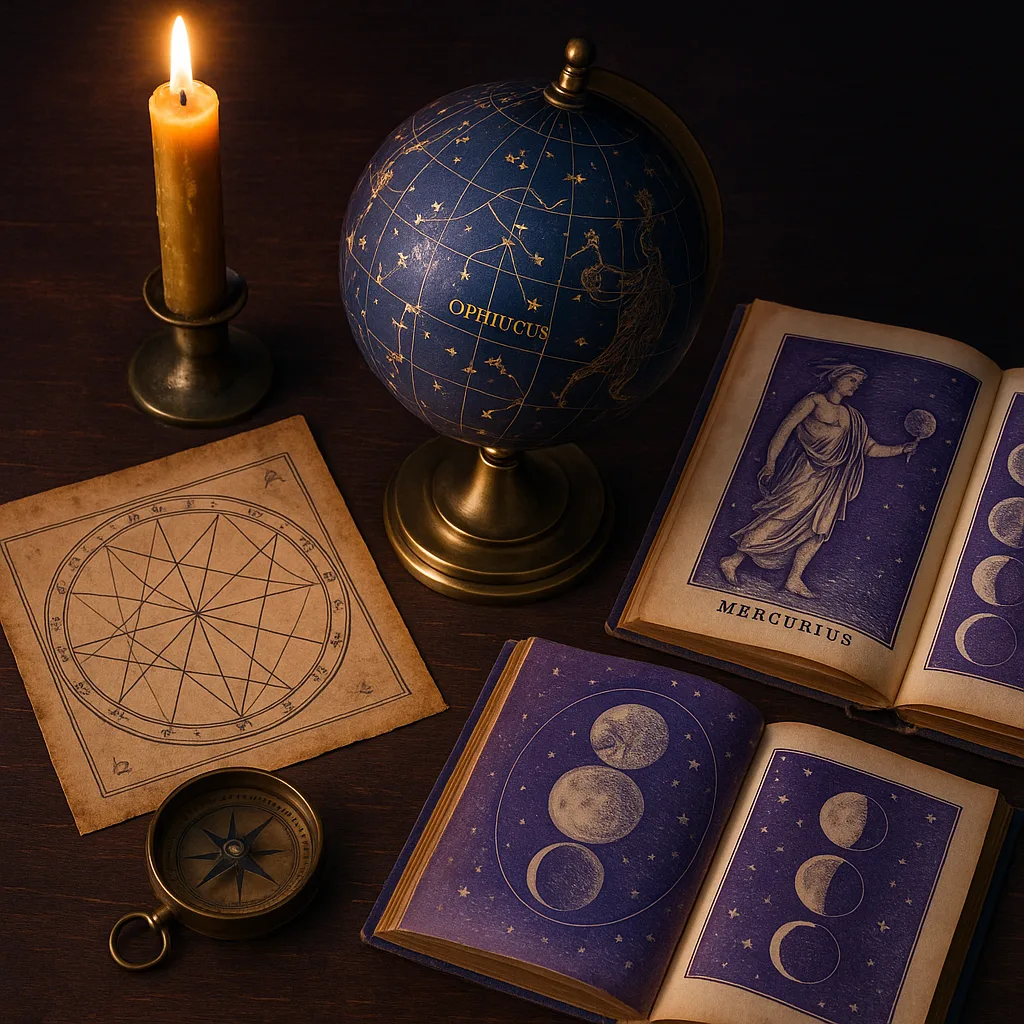
The full moon and the myth science never confirmed
If there's one celestial phenomenon that carries almost mythological weight in popular culture, it's the full moon. The belief that it makes people more restless, sleepless, or even aggressive is so old it gave rise to the word lunatic itself, used for centuries to describe behavior seen as out of the ordinary.
But when researchers set out to examine this connection rigorously, the so-called lunar effect simply didn't hold up. Multiple large-scale reviews of studies found no consistent statistical link between moon phases and human behavior. One particularly interesting example comes from a study conducted in Canada, which followed nearly six thousand children and found no meaningful impact of the lunar phase on behavior or sleep quality — with one small exception: a roughly five-minute reduction in sleep time during the full moon, equal to just 1% of the night. Hardly enough to support the idea of turbulent nights caused by the moon.
So why does the belief persist, generation after generation? The most accepted explanation ties back to a well-known cognitive bias: we tend to notice and remember, more vividly, the moments that confirm what we already expected. If someone believes the full moon brings restless nights, they'll notice — and remember — exactly the nights when that happened, while forgetting the many calm full moons that passed without incident.
There's also a subtler, more honest layer worth considering: even without any proven physical mechanism, the cultural expectation itself — that the full moon heightens emotions — can genuinely influence the mood of those who believe in it. It's not the moon pulling at the tides of human behavior — it's the symbolic power of belief, a real psychological effect, even if not a gravitational one.
Why we keep believing, even when we know the truth
Perhaps the most beautiful part of this investigation isn't proving the myths wrong, but understanding why they make so much sense to us in the first place. Stories like the 13th sign, Mercury seeming to move backward, and the moon seeming to stir up hearts all share a powerful narrative quality: they give a name to vague feelings, explain hard days, and create a shared script for the unexplainable.
Astrology, at its most generous, never asked to be mistaken for an exact science — it operates in a different territory, that of symbolic language, of metaphor that helps organize human experience. The problem isn't using the sky as a mirror for self-knowledge; it's turning poorly told rumors into absolute truths, whether dressed up as science or as astrology.
Knowing where a myth comes from doesn't strip the sky of its magic — it gives back what was always its most valuable quality: the honest curiosity of someone looking at the stars wanting to understand, not just to fear.
Next time someone brings up a secret sign, a villainous planet, or a maddening moon, maybe the most interesting response isn't just correcting the facts — but asking, with the same curiosity as the ancient sky-watchers, where that story came from and what it reveals about the very human search for meaning in what we can't control.

Recomendado
Curso MAPA ASTRAL
CURSO DESTRAVE SUA VIDA COM MAPA ASTRAL EM ATÉ 08 SEMANAS!